
 Posts
Posts


Seals and tablets of the sites of Rann of Kutch and even a huge hoarding at Dholavira are smithy/lapidary documents which are catalogs of stone- and metal-ware made by Meluhha-speaking artisans of Bronze Age.
Indus Writing deployed on these catalogs encode Meluhha (Mleccha) speech sounds.
 Welcome message, advertisement board on the Northern Gateway which leads into citadel of Dholavira. Surrounding and to the south, east and west of Dholavira are other industrial/artisan sites of Rann of Kutch, of Sindhu-Sarasvati civilization.
Ancient Near East Bronze Age -- heralded by Meluhha writing
 Segment 1: Working in ore, molten cast copper, lathe (work)
ḍato ‘claws or pincers of crab’ (Santali) rebus: dhatu ‘ore’ (Santali)
eraka ‘knave of wheel’ Rebus: eraka ‘copper’ (Kannada) eraka ‘molten cast (metal)(Tulu). sangaḍa 'pair' Rebus: sangaḍa ‘lathe’ (Gujarati) Vikalpa: dula 'pair' Rebus: dul 'cast (metal)'.
 Segment 2: Native metal tools, pots and pans, metalware, engraving (molten cast copper)
खांडा [ khāṇḍā ] m A jag, notch, or indentation (as upon the edge of a tool or weapon). (Marathi) Rebus: khāṇḍā ‘
aḍaren, ḍaren lid, cover (Santali) Rebus: aduru ‘native metal’ (Ka.) aduru = gan.iyinda tegadu karagade iruva aduru = ore taken from the mine and not subjected to melting in a furnace (Kannada) (Siddhānti Subrahmaṇya’ śāstri
koṇḍa bend (Ko.); Tu. Kōḍi corner; kōṇṭu angle, corner, crook. Nk. kōnṭa corner (DEDR 2054b) G. khū̃ṭṛī f. ʻangleʼ Rebus: kõdā‘to turn in a lathe’(B.) कोंद kōnda ‘engraver, lapidary setting or infixing gems’ (Marathi) koḍ ‘artisan’s workshop’ (Kuwi) koḍ = place where artisans work (G.) ācāri koṭṭya ‘smithy’ (Tu.) कोंडण [kōṇḍaṇa] f A fold or pen. (Marathi) B. kõdā ‘to turn in a lathe’; Or.kū̆nda ‘lathe’, kũdibā, kū̃d ‘to turn’ (→ Drav. Kur. Kū̃d ’ lathe’) (CDIAL 3295) A. kundār, B. kũdār, ri, Or.Kundāru; H. kũderā m. ‘one who works a lathe, one who scrapes’, rī f., kũdernā ‘to scrape, plane, round on a lathe’; kundakara—m. ‘turner’ (Skt.)(CDIAL 3297). कोंदण [ kōndaṇa ] n (कोंदणें) Setting or infixing of gems.(Marathi) খোদকার [ khōdakāra ] n an engraver; a carver. খোদকারি n. engraving; carving; interference in other’s work. খোদাই [ khōdāi ] n engraving; carving. খোদাই করা v. to engrave; to carve. খোদানো v. & n. en graving; carving. খোদিত [ khōdita ] a engraved. (Bengali) खोदकाम [ khōdakāma ] n Sculpture; carved work or work for the carver. खोदगिरी [ khōdagirī ] f Sculpture, carving, engraving: also sculptured or carved work. खोदणावळ [ khōdaṇāvaḷa ] f (खोदणें) The price or cost of sculpture or carving. खोदणी [ khōdaṇī ] f (Verbal of खोदणें) Digging, engraving &c. 2 fig. An exacting of money by importunity. V लाव, मांड. 3 An instrument to scoop out and cut flowers and figures from paper. 4 A goldsmith’s die. खोदणें [ khōdaṇēṃ ] v c & i ( H) To dig. 2 To engrave. खोद खोदून विचारणें or –पुसणें To question minutely and searchingly, to probe. खोदाई [ khōdāī ] f (H.) Price or cost of digging or of sculpture or carving. खोदींव [ khōdīṃva ] p of खोदणें Dug. 2 Engraved, carved, sculptured. (Marathi)
eraka ‘knave of wheel’ Rebus: eraka ‘copper’ (Kannada) eraka ‘molten cast (metal)(Tulu).
 Segment 3: Coppersmith mint, furnace, workshop (molten cast copper)
loa ’fig leaf; Rebus: loh ‘(copper) metal’ kamaḍha 'ficus religiosa' (Skt.); kamaṭa = portable furnace for melting precious metals (Te.); kampaṭṭam = mint (Ta.) The unique ligatures on the 'leaf' hieroglyph may be explained as a professional designation: loha-kāra '
khuṇṭa 'peg’; khũṭi = pin (M.) rebus: kuṭi= furnace (Santali) kūṭa ‘workshop’ kuṇḍamu ‘a pit for receiving and preserving consecrated fire’ (Te.) kundār turner (A.); kũdār, kũdāri (B.)
eraka ‘knave of wheel’ Rebus: eraka ‘copper’ (Kannada) eraka ‘molten cast (metal)(Tulu).
The complete message of the huge signboard, an advertisement hoarding with 15 inch high lettering could be seen by seafaring merchants entering from Persian Gulf or navigating the Rivers Sarasvati and Sindhu towards the northern gate of Dholavira.
The complete message read in three segments, inviting traders/artisans into a Meluhha copper metalworking and lapidary (engraving, bead-making) complex of Bronze Age:
 1. Working in ore, molten cast copper, lathe (work)2. Native metal tools, pots and pans, metalware, engraving (molten cast copper)3. Coppersmith mint, furnace, workshop (molten cast copper -- is the refrain repeated three times as 'nave of wheel' hieroglyph Glyph 391.)
The entry through the port of Dholavira open up the Meluhha Bronze Age industrial sites not far from Dholaviar (Kotda) to the seafaring merchants and artisans from Dilmun, Magan, Elam, Mesopotamia, Sumer and even beyond from places such as Altyn Depe or Haifa (Israel) where evidences for use of documents with Indus writing have been found.
Thus was conceived a monumental documentation for Meluhhan artisanal competence using the gigantic-sized hoarding on the northern gateway of Kotda, Dholavira fortification.
This verily constitutes the Bronze Age Standard of Eurasia -- not merely a Meluhha Standard.Ancient Near East Bronze Age Meluhha, smithy/lapidary documents, takṣat vāk, incised speech [Evidence from sites surrounding Bhuj in Kutch: Kanmer, Dholavira, Gola Dhoro (Bagasra), Shikarpur, Khirsara, Surkotada, Desalpur, Konda Bhadli, Juni Kuran, Narapa]
khuṇṭa 'peg’; khũṭi = pin (M.) rebus: kuṭi= furnace (Santali) kūṭa ‘workshop’ kuṇḍamu ‘a pit for receiving and preserving consecrated fire’ (Te.) kundār turner (A.); kũdār, kũdāri (B.)
1. Working in ore, molten cast copper, lathe (work)
The reconstruction of the Indus and Ghaggar-Hakra-Nara beddings is according to Flam, 1981, 1993. "According to L. Flam, not one but two rivers were flowing into the Arabian Sea during the Bronze Age: a Sindhu branch (Indus) and the Nara Nadi (Ghaggar-Hakra-Nara), the latter presently dried up. Both rivers were discharging in the east part of the delta, north of the Great Rann of Kutch. The ancient coast line of the delta is still in debate...Kutch...was an island surrounded by tidal sea in late Holocene times." (p.89) Source: http://www.persee.fr/
See: http://antiquity.ac.uk/
"The Citadel fortification walls on east, north and west had entry gates. Just near the door, chambers were built at a height with roofs supported on pillars, parts of which can be seen even today. The main through-way in the citadel was segregated in three sections, marked by means of 2 polished pillars. In one of the two north gate chambers, archaeologists found a huge name board written with 10 Indus script glyphs or symbols. Each of this was made from Gypsum and was 15 inches high. Total length of this board was about 3 meters and the gypsum symbols were embedded in wood, which had rotted away later, leaving only the symbols intact. " See: http://
| [quote] KACHCHH PENINSULA AND THE GREAT RANN | |
|
"Historical accounts suggest that the rann was occupied by a shallow navigable sea, which is confirmed by the presence of several archaeological sites belonging to the Harappan civilization, including the port town of Dholavira located on the Khadir Island. Presently also, a large part of the Rann surface gets inundated by storm tides from the west and the rest by annual monsoon precipitation." Maurya, DM, et al, Subsurface sediment characteristics of the Great Rann of Kachchh, western India based on preliminary evaluation of textural analysis of two continuous sediment cores, in: Current Science, Vol. 104, No. 8, 25 April 2013, p. 1071.
"Malik and others also highlighted the evolution of the delta comlex of the Sarasvati and other extinct rivers of northwest India and the role of tectonic movements and aridity. In their recent investigations of the Rann of Kachtchh, they proposed that the formation of the delta complex system was a result of contribution of three rivers -- Proto Shatadru (Hakra), Saraswati and Drishadvati Rivers. They also recorded evidence of a fragmentary delta near the western flank of the Nagar Parker Hill joining the relict channel of the Sukri, a branch of the Luni River. This is identified with the ancient Drishadvati. A sequence of neo-tectonics around 3500 to 3000 years ago caused a significant decrease in the flow of water in the Sarasvati and Drishadvati, while the Shatadru was diverted towards Indus (Malik, JN, SS Merh and V. Sridhar, 1999, Palaeo-delta complex of Vedic Saraswati and other ancient rivers of northwestern India, Vedic Sarasvati. Memoirs of Geological Society of India 42: 163-174.) (Anjana Reddy, 2008, Exploration in the Ghaggar Basin and excavations at Girwad, Farmana (Rohtak district) and Mitathal (Bhiwani district), Haryana, p.84) http://www.academia.edu/
 Dholavira. Ring-stone used tohold a pillar. Inside castle-wall.
 Dholavira. Polished stone pillars.
 Dholavira (Kotda).The two 'sthambs', or polished pillars, which are claimed to resemble Sivalingas, in the citadel.
[quote] Bisht was non-committal when asked if the two “sthambs” found at the Dholavira site and the phallus-like stone artefacts excavated there but kept in Purana Qila, New Delhi, looked like Sivalingas. Nauriyal said, separately: “They definitely resemble male organs. What the concept was, it is difficult to comment. Whether they were used for worship, magic, ritual or as a good omen, we do not know.” On what led to the collapse of Dholavira, Nauriyal said: “The snap in the trade relationship with foreign countries, possibly.” It was largely maritime trade. Goods could not be traded any more. “There must have been a host of factors and the economic factor must have been one of them,” he said. [unquote] http://www.
These pillars evoke the imageries of a festival which is celebrated even today by Lingavantas, particularly in Karnataka.
These pillars at Dholavira could be a depiction of pillars of flame as Sivalinga.
Etyma from Meluhha (Mleccha) point to khoṇḍ as a square (Santali) , the type of square on which two pillars are found in Dholavira. Rebus: kõdā ‘to turn in a lathe’ (Bengali). kũdar ‘brass-worker, turner’. Thus, koṇḍ habba is a celebration of the life-activity of the lapidaries/smiths of the civilization: kõdā meaning 'lathe-turning' for making perforated beads or for turning/forging metalware..This may explain why in the tablets showing procession as a festival ceremony, two hieroglyphs are carried as standards: both hieroglyphs relate to the one-horned young bull and the standard device (lathe). The related words reading hieroglyphs rebus from Meluhha (Mleccha) speech are: kõdā sã̄gāḍī Rebus words denote: ‘metals turner-joiner (forge); worker on a lathe’ – associates (guild)'.
This khoṇḍ 'square' could have been used to celebrate a festival which is called koṇḍahabba. The adorants walk on a bed of burning embers in fulfilment of their vows. Sucha bed of burning embers might have been laid on the square linking these two pillars of Dholavira shaped like sivalingas, symbolising pillars of fire. The significance attached to th word khoṇḍ may explain the local name for Dholavira: Kotḍa.
It is notable that a smithy was a temple for Meluhhans (Mlecchas). This is evidenced by the lexeme kole.l of Kota language which means 'smithy' and also 'temple'. Thus, a smithy is a temple -- kole.l Such a gestalt relatable to the lapidaries and smiths -- miners/metalworkers may explain why the agamas prescribe the procedures for invoking divinities in sculptures in a sanctum of a temple, adorned with metallic weapons on their multiple hands.
It is, thus, possible to hypothesise that the religious practices of the people of the civilization at Mohenjodaro, Harappa, Kalibangan (where a terracotta Sivalinga has been found) and Dholavira are represented by the continuum of koṇḍahabba festivals celebrated by Lingavantas.
Turner
kundau, kundhi corner (Santali) kuṇḍa corner (S.): khoṇḍ square (Santali) *khuṇṭa2 ʻ corner ʼ. 2. *kuṇṭa -- 2. [Cf. *khōñca -- ] 1. Phal. khun ʻ corner ʼ; H. khū̃ṭ m. ʻ corner, direction ʼ (→ P. khũṭ f. ʻ corner, side ʼ); G. khū̃ṭṛī f. ʻ angle ʼ. <-> X kōṇa -- : G. khuṇ f., khū˘ṇɔ m. ʻ corner ʼ. 2. S. kuṇḍa f. ʻ corner ʼ; P. kū̃ṭ f. ʻ corner, side ʼ (← H.).(CDIAL 3898).


Evidence for Sivalinga is provided in other sites (Mohenjodaro and Harappa) of the civilization:
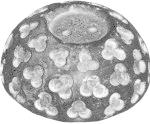 Tre-foil inlay decorated base (for linga icon?); smoothed, polished pedestal of dark red stone; National Museum of Pakistan, Karachi; After Mackay 1938: I, 411; II, pl. 107:35; Parpola, 1994, p. 218.
 Two decorated bases and a lingam, Mohenjodaro.
  Lingam, grey sandstone in situ, Harappa, Trench Ai, Mound F, Pl. X (c) (After Vats). "In an earthenware jar, No. 12414, recovered from Mound F, Trench IV, Square I... in this jar, six lingams were found along with some tiny pieces of shell, a unicorn seal, an oblong grey sandstone block with polished surface, five stone pestles, a stone palette, and a block of chalcedony..." (Vats,MS, Excavations at Harappa, p. 370)
Kutch Sindhu-Sarasvati civilization sites.
Juni Kuran, dt. Kachchha
Excavations conducted at the site for two field seasons (2003-04 and 2004-05) have revealed cultural remains of Harappan culture. The excavation has brought to light three-fold division of town planning i.e. Citadel, Middle Town and Lower Town each being fortified. Important structural findings include mud platform of 03 m height, two stadiums (one for commoners and the other for aristocrats), pillared hall and chamber on fortification wall and gateways. Besides, a good number of antiquities were discovered including a seal with unicorn and 8 letters. (Not illustrated) http://asi.nic.
Desalpur (Gunthli)
 Desalpur seal. Desalpur sealing.
kan.d.a kanka ‘rim of jar’ (Santali) kan.d.a ‘furnace, fire-altar’ (Santali); khanaka ‘miner’ karNaka ‘scribe’ (Skt.)
kāmaṭhum = a bow; ka_mad.i_, ka_mad.um = a chip of bamboo (G.) ka_maṭhiyo a bowman; an archer (Skt.lex.) Rebus: kammaṭa = portable furnace (Te.) kampaṭṭam coiner, mint (Ta.)
sal stake, spike, splinter, thorn, difficulty (H.); Rebus: sal ‘workshop’ (Santali)
ad.ar ‘harrow’; rebus: aduru ‘native metal, unsmelted’ (Ka.) kolom = cutting, graft; to graft, engraft, prune; kolma hoṛo = a variety of the paddy plant (Desi)(Santali.) kolom ‘three’ (Mu.) Rebus: kolami ‘furnace, smithy’ (Te.)

 Text of Desalpur seal1. 9071.
sal stake, spike, splinter, thorn, difficulty (H.); Rebus: sal ‘workshop’ (Santali)
kuṭi = a slice, a bit, a small piece (Santali.lex.Bodding) Rebus: kuṭhi ‘iron smelter furnace’ (Santali)
ayo ‘fish’; rebus: ayas ‘metal, iron’ (Pan.Skt.) dol ‘likeness’; rebus: dul ‘cast (metal)’ (Santali)
ranku ‘antelope’; rebus: ranku ‘tin’ (Santali)
koṇḍa-miṇdi eyelid (Go.)(DEDR 4864). Rebus: meḍ ‘iron’ (Santali. Mundari) koṇḍa 'turned in lathe'.
kan.d.a kanka ‘rim of jar’ (Santali) kan.d.a ‘furnace, fire-altar’ (Santali); khanaka ‘miner’ karNaka ‘scribe’ (Skt.)
 Desalpur. Seal2.
ranku ‘liquid measure’; rebus: ranku ‘tin’ (Santali)
khaḍā ‘circumscribe’ (M.); Rebs: khaḍā ‘nodule (ore), stone’ (M.)
pajhaṛ = to sprout from a root (Santali) Rebus: pasra ‘smithy’ (Santali) Vikalpa: tagaraka 'tabernae montana' Rebus: tagarak 'tin' (Malayalam)
अंकडा [aṅkaḍā] m (अंक S) Also अकडा m A hook or crook, a curved end gen. (M.) Rebus: अखाडा [ akhāḍā ] m ( H) A community, or the common place of residence or of assembly, of persons engaged in study or some particular pursuit; a college, a disputation-hall, a gymnasium, circus, arena. Hence, A club or clubroom; a stand of idlers, loungers, newsmongers, gossips, scamps. 2 An order of men. Ex. गोसाव्यांचे अठरा अखाडे आहेत.(M.)
Apart from basic Harappan pottery, two script bearing seals, one of steatite and other of copper were also found; one script bearing terrecotta sealings was also found. http://www.asi.nic.in/nmma_


Figure 3a. Three clay sealings from Kanmer with 'one-horned young bull' (unicorn) motif. Figure 3b. Top view of the three Kanmer sealings (pictured in Figure 3a) with different motifs suggesting different uses/users.
Some Meluhha (Mleccha) glosses read rebus on the identical seal impression on Kanmer circular tablets:
See: Desinamamala of Hemacandra ed. R. Pischel (1938) (embedded). This glossary of deśi words is a veritable lexicon of Meluhha (Mleccha) exemplified by the inscriptions of sites in Rann of Kutch using Indus writing.
koḍa ‘one’(Santali) Rebus: koḍ
kāmsako, kāmsiyo = a large sized comb (G.) Rebus: kaṁsa 'bronze' (Te.)
mēd ‘body’ (Kur.)(DEDR 5099); meḍ ‘iron’ (Ho.) kāḍ 2 काड् a man's length, the stature of a man (as a measure of length); rebus: kāḍ ‘stone’; Ga. (Oll.) kanḍ , (S.) kanḍu (pl. kanḍkil) id.
An evidence comes from Kanmer, for the use of tablets created with duplicate seal impressions. These tablets may have been used as category tallies of lapidary workshops.
(Source: http://www.antiquity.
(Source: http://www.antiquity.
Obverse of these tiny 2 cm. dia. tablets show some incised markings. It is unclear from the markings if they can be compared with any glyphs of the Indus script corpora. They may be ‘personal’ markings like ‘potter’s marks’ – designating a particular artisan’s workshop (working platform) or considering the short numerical strokes used, the glyphs may be counters (numbers or liquid or weight measures). More precise determination may be made if more evidences of such glyphs are discovered. Excavators surmise that the three tablets with different motifs on the obverse of the three tablets suggest different users/uses. They may be from different workshops of the same guild but as the other side of the tables showed, the product taken from three workshops is the same.
 m1162. Mohenjo-daro seal with the same hieroglyph which appears on Kanmer circular tablets.
  Glyph 33. Text 2068 kāmsako, kāmsiyo = a large sized comb (G.) Rebus: kaṁsa bronze'; kã̄sāri ʻpewterer
m1162 Text 2058 Ligatured glyph of three sememes: 1. meḍ ‘body’(Mu.); rebus: ‘iron’ (Ho.); kāḍ 2 काड् a man's length, the stature of a man (as a measure of length); rebus: kāḍ ‘stone’;Ga. (Oll.) kanḍ , (S.) kanḍu (pl. kanḍkil) stone; 2. aḍar ‘harrow’; rebus: aduru ‘native metal’. ibha ‘elephant’; rebus: ibbo ‘merchant’ (Gujarati)
kã̄ḍ reed Rebus: kāṇḍa ‘tools, pots and pans, metal-ware’ Ku. lokhaṛ ʻiron
Kanmer. A large number of bead-making goods — 150 stone beads and roughouts, 160 drill bits, 433 faience beads and 20,000 steaite beads — were found here, indicating the site's importance as an industrial unit. Agatequarries were also located at a distance of 20 kilometres (12 mi) from the site. http://en.wikipedia.org/
The compound glyph on the 3 tablets refers to stone and bronze workshop. kāḍ kaṁsa koḍ '
It would appear that the three tablets (seal impressions) originated in three distinct phases of the lapidary/smithy processes, based on the following rebus readings of three distinct sets of incised glyphs on the obverse of the tablets. The three phases are: mineral workshop, furnce workshop (smithy), metal workshop (forge).
Mineral workshop
It would appear that the three tablets (seal impressions) originated in three distinct phases of the lapidary/smithy processes, based on the following rebus readings of three distinct sets of incised glyphs on the obverse of the tablets. The three phases are: mineral workshop, furnce workshop (smithy), metal workshop (forge).
Mineral workshop
 dāṭu
dāṭusal stake, spike, splinter, thorn, difficulty (H.) Rebus: sal ‘workshop’ (H.)
kod. ‘one’ (Santali); rebus: kod. ‘workshop’ (G.)
Furnace workshop
 aṭar ‘splinter’ (Ma.); aḍaruni ‘to crack’ (Tu.) aduru ‘native metal (Ka.)
baṭa = a kind of iron (G .) baṭa = rimless pot (Kannada)
S. baṭhu m. ‘large pot in which grain is parched, large cooking fire’, baṭhī f. ‘distilling furnace’; L. bhaṭṭh m. ‘grain—parcher's oven’, bhaṭṭhī f. ‘kiln, distillery’, awāṇ. bhaṭh; P. bhaṭṭh m., °ṭhī f. ‘furnace’, bhaṭṭhā m. ‘kiln’; S. bhaṭṭhī keṇī ‘distil (spirits)’. (CDIAL 9656)
Metal workshop
 ayo, hako 'fish'; a~s = scales of fish (Santali); rebus: aya = iron (G.); ayah, ayas = metal (Skt.)
sal stake, spike, splinter, thorn, difficulty (H.) Rebus: sal ‘workshop’ (H.)
kod. ‘one’ (Santali); rebus: kod. ‘workshop’ (G.)
Decoding of the identical inscription on the three tablets of Kanmer.
Glyph: One long linear stroke. koḍa ‘one’ (Santali) Rebus: koḍ ‘artisan’s workshop’ (Kuwi) Glyph: meḍ ‘body’ (Mu.) Rebus: meḍ ‘iron’ (Ho.) Ligatured glyph : aḍar ‘harrow’ Rebus: aduru ‘native metal’ (Kannada). Thus the glyphs can be read rebus. Glyph: koḍiyum ‘heifer’ (G.) Rebus: koḍ ‘workshop (Kuwi) Glyph: sangaḍa ‘lathe’ (Marathi) Rebus 1: Rebus 2: sangaḍa ‘association’ (guild). Rebus 2: sangatarāsu ‘stone cutter’ (Telugu). The output of the lapidaries is thus described by the three tablets: aduru meḍ sangaḍa koḍ ‘iron, native metal guild workshop’.


Elephant glyph: ibha 'elephant' (Skt.) Rebus: ib 'iron' (Santali) ibbo 'merchant' (Gujarati)
Metal
ayo ‘fish’ (Mu.); kaṇḍa ‘arrow’; kaṇḍa, k
Workshop
sal “stake, spike, splinter, thorn, difficulty” (H.);
Rebus: sal ‘workshop’ (Santali); śāla id. (Skt.)
Turner
kundau, kundhi corner (Santali) kuṇḍa corner (S.): khoṇḍ square (Santali) *khuṇṭa2 ʻ corner ʼ. 2. *kuṇṭa -- 2. [Cf. *khōñca -- ] 1. Phal. khun ʻ corner ʼ; H. khū̃ṭ m. ʻ corner, direction ʼ (→ P. khũṭ f. ʻ corner, side ʼ); G. khū̃ṭṛī f. ʻ angle ʼ. <-> X kōṇa -- : G. khuṇ f., khū˘ṇɔ m. ʻ corner ʼ. 2. S. kuṇḍa f. ʻ corner ʼ; P. kū̃ṭ f. ʻ corner, side ʼ (← H.).(CDIAL 3898).
Allograph: kunta 'lance, spear' (Kannada)
Allograph: kunta 'lance, spear' (Kannada)
Rebus: kunda1 m. ʻ a turner's lathe ʼ lex. [Cf. *cunda -- 1] N. kũdnu ʻ to shape smoothly, smoothe, carve, hew ʼ, kũduwā ʻ smoothly shaped ʼ; A. kund ʻ lathe ʼ, kundiba ʻ to turn and smooth in a lathe ʼ, kundowā ʻ smoothed and rounded ʼ; B. kũd ʻ lathe ʼ, kũdā, kõdā ʻ to turn in a lathe ʼ; Or. kū˘nda ʻ lathe ʼ, kũdibā, kū̃d° ʻ to turn ʼ (→ Drav. Kur. kū̃d ʻ lathe ʼ); Bi.kund ʻ brassfounder's lathe ʼ; H. kunnā ʻ to shape on a lathe ʼ, kuniyā m. ʻ turner ʼ, kunwā m. (CDIAL 3295). kundakara m. ʻ turner ʼ W. [Cf. *cundakāra -- : kunda -- 1, kará -- 1] A. kundār, B. kũdār, °ri, Or. kundāru; H. kũderā m. ʻ one who works a lathe, one who scrapes ʼ, °rī f., kũdernā ʻ to scrape, plane, round on a lathe ʼ.(CDIAL 3297). Ta. kuntaṉam interspace for setting gems in a jewel; fine gold (< Te.). Ka. kundaṇa setting a precious stone in fine gold; fine gold; kundana fine gold.Tu. kundaṇa pure gold. Te. kundanamu fine gold used in very thin foils in setting precious stones; setting precious stones with fine gold. (DEDR 1725).
Ka. kunda a pillar of bricks, etc. Tu. kunda pillar, post. Te. kunda id. Malt.
Ka. kunda a pillar of bricks, etc. Tu. kunda pillar, post. Te. kunda id. Malt.
Decoding the Indus script epigraphs of two Meluhha sitesÂ
The pictorial motifs and the epigraphs of the Kanmer seal and Gola Dhoro (Bagasra) seals and sealing have been decoded as metalsmith guild tokens. Both sites are in Rann of Kutch, Gujarat.
For a small-sized settlement of less than 2 hectares, stunning arrays of copper artefacts were found: A copper vessel containing eight bangles, an axe probably used for recycling precious metal, copper knives with bone handles have been found. A unique copper battle-axe (parashu) is also an interesting find from this area and the small size of the battle-axe suggests it as presumably used for ritualistic purpose. Heavily tampered clay crucibles with copper adhering in them have been found, suggesting that they might have been used for copper smelting.
The pictorial glyphs and the sign glyphs together constitute the listing of smithy/forge/metalguild workshop repertoire.
See: http://www.harappa.com/
At Shikarpur were found, in addition to an inscribed square terracotta tablet, two terracotta sealings with possible textile (?) marks or impressions of threat and knot, on the obverse. Thumb-nail impressions, like crescent marks are found all around one seealing which also shows a one-horned young bull joined with the heads of a bull and an antelope looking backwards (See d in Figure). A second sealing has impressions from three different inscribed seals.
The legible glyphs on seal (a) in the Figure are:

A warrior glyph.
Three linear strokes, followed by a horn glyph
Read rebus:
bhaṭa 'warrior'. Rebus: bhaṭa ‘furnace’
kolom ’three. Rebus: kolami ’smithy, forge’.
kõṭ ‘horn’ Rebus: khoṭa ʻingot forged, alloyʼ Vikalpa: koḍ 'horn' Rebus: koḍ 'workshop'.
The thumb-nail U shaped impressions on the Shikarpur sealings may denote:
U Glyph: baṭhu m. ‘large pot in which grain is parched.
Rebus: baṭi, bhaṭi ‘furnace’ (H.) Rebus: baṭa = a kind of iron (G.) bhaṭa ‘furnace’ (G.) baṭa = kiln (Santali). bhaṭa = an oven, kiln, furnace (Santali) baṭhi furnace for smelting ore (the same as kuṭhi) (Santali) bhaṭa = an oven, kiln, furnace; make an oven, a furnace; iṭa bhaṭa = a brick kiln; kun:kal bhaṭa a potter’s kiln; cun bhaṭa = a lime kiln; cun tehen dobon bhaṭaea = we shall prepare the lime kiln today (Santali); bhaṭa ‘furnace’ (G.) baṭa = kiln (Santali); bhaṭṭha -- m.n. ʻ gridiron (Pkt.) baṭhu large cooking fire’ baṭhī f. ‘distilling furnace’; L. bhaṭṭh m. ‘grain—parcher's oven’, bhaṭṭhī f. ‘kiln, distillery’, awāṇ. bhaṭh; P. bhaṭṭh m., ṭhī f. ‘furnace’, bhaṭṭhā m. ‘kiln’; S. bhaṭṭhī keṇī ‘distil (spirits)’. (CDIAL 9656)

Shikarpur 2009. Terracotta inscribed square tablet and terracott sealings with inscribed seal impressions.

Shikarpur 2009: Copper implements.
Khirsara. During 1976-77 exploration, an Archaeological Survey of India official discovered a big cubical weight, chunks of pottery, sprinklers and spouts of red polished ware from the site. In December 2009, a team from the Vadodara division of the Archaeological Survey of India started excavation at this site after the discovery of a 300 m² fortification wall. http://en.wikipedia.org/
 A bar seal with writing in Harappan script. Only one other bar seal figures in the total of 11 seals found so far in Khirsara. The entire metalware catalog of the inscription on the tablet reads:
meḍ 'iron'+ tagaram'tin'+ dul aduru 'cast native metal'.+ ayah, ayas 'metal' + aduru = ore taken from the mine and not subjected to melting in a furnace+ dhātu 'mineral'+ koli
Thus, the smithy forge account is for iron, tin, cast native metal, unsmelted native metal, metal (alloy), mineral.
A bar seal with writing in Harappan script. Only one other bar seal figures in the total of 11 seals found so far in Khirsara.
Rebus readings of Indus writing (from r.): मेंढरी [ mēṇḍharī ] f A piece in architecture. मेंधला [
tagaraka 'tabernae montana' Rebus: tagaram'tin' (Malayalam)
sangaḍa ‘bangles’ (Pali). Rebus: sangaḍa ‘lathe, furnace’. saghaḍī = furnace (G.) Rebus: jaṅgaḍ ‘entrustment articles’ sangaḍa ‘
Ku. koṭho ʻlarge square houseʼ Rebus: Md. kořāru ʻstorehouseʼ
aḍar ‘harrow’ Rebus: aduru = gaṇiyinda tegadu karagade iruva aduru = ore taken from the mine and not subjected to melting in a furnace (Kannada) dula 'pair' Rebus: dul ‘casting’. Thus the composite glyph reds dul aduru 'cast native metal'.
ayo ‘fish’ (Mu.) Rebus: aya = iron (G.); ayah, ayas = metal (Skt.)
aḍar ‘harrow’ Rebus: aduru = gan.iyinda tegadu karagade iruva aduru = ore taken from the mine and not subjected to melting in a furnace (Kannada)
ḍato = claws of crab (Santali); dhātu = mineral (Skt.), dhatu id. (Santali)
kanka 'rim-of-jar' Rebus: furnace account (scribe); khanaka 'miner' (Skt.). kolom 'three' Rebus: kolami 'smithy, forge' (Telugu) The ligature of three strokes with rim-of-jar hieroglyph thus reads: kolimi kanka 'smithy/forge account (scribe)'.
 Khirsara. Beads.
 Khirasra. Disc-shaped gold beads found in a pot.
 Khirasra. A copper fish-hook found in a trench.
 Dholavira. A chessboard (on the stone slab at right) and an architectural member that resembles a Sivalinga.
 Dholavira. A grinding stone at the site museum.
 Dholavira. A chessboard (on the stone slab at right) and an architectural member that resembles a Sivalinga.
 Rebus readings of Meluhha Indus writing on the exquisite socketed seal of Bagasra (Gola Dhoro)
This seal (GD1) was discovered in the gateway of the city wall at Gola Dhoro (Bagasra).
The socket might have held a lid to enclose a tablet containing some other message(s) to complete the metalware catalog created by the inscriptions on three sides of the uniquely fashioned seal.
Pictorial motif of a one-horned young bull in front of standard device is common to all the five seals of Gola Dhoro (Bagasra) and a sealing of Gola Dhoro: kod.iyum 'young bull' (Gujarati); Rebus: kot.e 'forge'; kod. 'workshop'. sangad.a 'lathe, furnace'. Rebus: jangad 'entrustment note' (Gujarati)

^ glyph as a pictorial (lid) Lexemes: aḍaren, ḍaren lid, cover (Santali) Rebus: aduru ‘native metal’ (Ka.)
The word for a 'set of four' is: gaṇḍa (Santali); bar gaṇḍa poesa = two annas; pon gaṇḍa aphor menaka, there are 16 bunches of rice seedlings; gaṇḍa guṇḍa to be broken into pieces or fragments; fragments; gaṇḍa guṭi to dive, to make up an account; the system of 'gaṇḍa guṭi' is to put down a pebble, or any other small object, as the name of each person entitled to share is mentioned. Then a share is placed alongside of each pebble, or whatever else laid down. (Santali.lex.) Thus, the complex glyph is read: aduru ayo kaṇḍ 'native metal furnace'.

bhaṭa ‘warrior’; bhaṭa ‘six’ (G.) Rebus: baṭa = kiln (Santali); baṭa = a kind of iron (G.) kamaṛkom = fig leaf (Santali.lex.) kamarmaṛā (Has.

kāmaṭhum = a bow; kāmaḍī, kāmaḍum = a chip of bamboo (G.) Rebus: kampaṭṭam coinage, coin (Ta.); kammaṭṭam, kammiṭṭam coinage, mint (Ma.); kammatia coiner (Ka.)(DEDR 1236) kammaṭa = coinage, mint (Ka.M.) kampaṭṭa-k-kūṭam mint; kampaṭṭa-k-kāran- coiner; kampaṭṭa- muḷai die, coining stamp (Ta.lex.)
Explaining the pair of bows:
Glyph: dol ‘likeness, picture, form’ [e.g., two tigers, two bulls, sign-pair.]
Kashmiri. dula दुल । युग्मम् m. a pair, a couple, esp. of two similar things (Rām. 966).
ḍol ‘the shaft of an arrow, an arrow’ (Santali)
Rebus: dul meṛeḍ cast iron (Mundari. Santali) dul ‘to cast metal in a mould’ (Santali)
pasra meṛed, pasāra meṛed = syn. of koṭe meṛed = forged iron, in contrast to dul meṛed, cast iron (Mundari.lex.)
pasra meṛed, pasāra meṛed = syn. of koṭe meṛed = forged iron, in contrast to dul meṛed, cast iron (Mundari.lex.)

Forge -- Metal Turner Workshop
sal “stake, spike, splinter, thorn, difficulty” (H.);
Rebus: sal ‘workshop’ (Santali); s’a_la id. (Skt.)
Turner
kundau, kundhi corner (Santali) kuṇḍa corner (S.): khoṇḍ square (Santali) *khuṇṭa2 ʻ corner ʼ. 2. *kuṇṭa -- 2. [Cf. *khōñca -- ] 1. Phal. khun ʻ corner ʼ; H. khū̃ṭ m. ʻ corner, direction ʼ (→ P. khũṭ f. ʻ corner, side ʼ); G. khū̃ṭṛī f. ʻ angle ʼ. <-> X kōṇa -- : G. khuṇ f., khū˘ṇɔ m. ʻ corner ʼ. 2. S. kuṇḍa f. ʻ corner ʼ; P. kū̃ṭ f. ʻ corner, side ʼ (← H.).(CDIAL 3898).
Rebus: kunda1 m. ʻ a turner's lathe ʼ lex. [Cf. *cunda -- 1] N. kũdnu ʻ to shape smoothly, smoothe, carve, hew ʼ, kũduwā ʻ smoothly shaped ʼ; A. kund ʻ lathe ʼ, kundiba ʻ to turn and smooth in a lathe ʼ, kundowā ʻ smoothed and rounded ʼ; B. kũd ʻ lathe ʼ, kũdā, kõdā ʻ to turn in a lathe ʼ; Or. kū˘nda ʻ lathe ʼ, kũdibā, kū̃d° ʻ to turn ʼ (→ Drav. Kur. kū̃d ʻ lathe ʼ); Bi.kund ʻ brassfounder's lathe ʼ; H. kunnā ʻ to shape on a lathe ʼ, kuniyā m. ʻ turner ʼ, kunwā m. (CDIAL 3295). kundakara m. ʻ turner ʼ W. [Cf. *cundakāra -- : kunda -- 1, kará -- 1] A. kundār, B. kũdār, °ri, Or. kundāru; H. kũderā m. ʻ one who works a lathe, one who scrapes ʼ, °rī f., kũdernā ʻ to scrape, plane, round on a lathe ʼ.(CDIAL 3297). Ta. kuntaṉam
Ka. kunda a pillar of bricks, etc. Tu. kunda pillar, post. Te. kunda id. Malt.
Ka. kunda a pillar of bricks, etc. Tu. kunda pillar, post. Te. kunda id. Malt.
 kolom 'sprout' Rebus: kolami 'smithy, forge'. kolmo 'three' Rebus: kolami 'smithy, forge'. An alternative reading could be: tagaraka 'tabernae montana' Rebus: tagaram 'tin'. Thus, the inscription may read: tagaram kolami 'tin smithy/forge'.
Gola Dhoro (Bagasra) GD5 seal. Rebus readings of inscription:

^ glyph as a pictorial (lid) Lexemes: aḍaren, ḍaren lid, cover (Santali) Rebus: aduru ‘native metal’ (Ka.)
The word for a 'set of four' is: gan.d.a (Santali); bar gan.d.a poesa = two annas; pon gan.d.a aphor menaka, there are 16 bunches of rice seedlings; gan.d.a gun.d.a to be broken into pieces or fragments; fragments; gan.d.a gut.i to dive, to make up an account; the system of 'gan.d.a gut.i' is to put down a pebble, or any other small object, as the name of each person entitled to share is mentioned. Then a share is placed alongside of each pebble, or whatever else laid down. (Santali.lex.) Thus, the complex glyph is read: aduru ayo kaṇḍ 'native metal furnace'.
ayo, hako 'fish'; a~s = scales of fish (Santali); rebus: aya = iron (G.); ayah, ayas = metal (Skt.)
Kashmiri. dula दुल । युग्मम् m. a pair, a couple, esp. of two similar things (Rām. 966). Rebus: dul meṛeḍ cast iron (Mundari. Santali) dul ‘to cast metal in a mould’ (Santali)
kundau, kundhi corner (Santali) kun.d.a corner (S.); ku~_t. corner, side (P.)(CDIAL 3898).
khon.d. square (Santali)Rebus: kund lathe (A.); kundiba to turn and smooth in a lathe (A.); ku~d lathe (B.); ku~da_, ko~da_ to turn in a lathe (B.); ku~_nda lathe (Or.); ku~diba_, ku~_diba_ to turn (Or. > ku~_d lathe (Kur.); kund brassfounder's lathe (Bi.); kunna_ to shape on a lathe (H.); kuniya_ turner (H.); kunwa_ turner (H.)(CDIAL 3295).
1. Pk. kaṁkaya -- m. ʻ comb ʼ, kaṁkaya -- , °kaï -- m. ʻ name of a tree ʼ; Gy. eur. kangli f.; Wg. kuṇi -- přũ ʻ man's comb ʼ (for kuṇi -- cf. kuṇälík beside kuṅälík s.
kāmsako, kāmsiyo = a large sized comb (G.) Rebus: kaṁsa= bronze (Te.) kã̄sāri ʻpewtere

 Surkotada 4 9094 Surkotada 7.Inscribed on pottery.
 Text 9091 Surkotda 1. Seal
Text 9091 reads:
 Surkotada 2,3,6 Indus Writing Meluhha inscriptions
 Glhyph 391 Glyph: nave of wheel; Rebus: Molten cast copper

 Glyph: rhombus. khoṇḍ square (Santali) Rebus: kõdā ‘to turn in a lathe’ (Bengali)
 Text 9091 Surkotda 1. SealText 9091 reads:
era, er-a = eraka = ?nave; erako_lu = the iron axle of a carriage (Ka.M.); cf. irasu (Ka.lex.) [Note Sign 391 and its ligatures Signs 392 and 393 may connote a spoked-wheel, nave of the wheel through which the axle passes; cf. ara_, spoke] eraka, era, er-a = syn. erka, copper, weapons. Rebus: er-r-a = red; eraka = copper (Ka.) erka = ekke (Tbh. of arka) aka (Tbh. of arka) copper (metal); crystal (Ka.lex.) agasa_le, agasa_li, agasa_lava_d.u = a goldsmith (Te.lex.) erka = ekke (Tbh. of arka) aka (Tbh. of arka) copper (metal); crystal (Ka.lex.) cf. eruvai = copper (Ta.lex.) eraka, er-aka = any metal infusion (Ka.Tu.); erako molten cast (Tu.lex.)
Glyph: ‘archer’: kamāṭhiyo = archer; kāmaṭhum = a bow; kāmaḍ, kāmaḍum = a chip of bamboo (G.) kāmaṭhiyo a bowman; an archer (Skt.lex.) Rebus: kammaṭi a coiner (Ka.); kampaṭṭam coinage, coin, mint (Ta.) kammaṭa = mint, gold furnace (Te.)
kolmo ‘paddy plant’ (Santali); Rebus: kolimi ‘smithy, forge’ (Te.) kolom = cutting, graft; to graft, engraft, prune; kolma hoṛo = a variety of the paddy plant (Desi)(Santali.) + 'splinter' glyph: sal 'splinter' Rebus: sal 'workshop'. Thus, the pair of glyphs read: kolimi sal 'smithy/forge workshop'.
gaṇḍa ‘four’ (Santali); rebus: kaṇḍ fire-altar, furnace’ (Santali) + kolmo ‘paddy plant’ (Santali); Rebus: kolimi ‘smithy, forge’ (Te.). Together, the pair of glyphs read: kaṇḍ kolimi smithy/forge (with) fire-altar.
The entire inscription Text 9091 on Surkotada1 Seal thus reads: eraka 'copper molten cast' + kammaṭa 'mint' + kolim
Glhyph 391 Glyph: nave of wheel; Rebus: Molten cast copperera, er-a = eraka = ?nave; erako_lu = the iron axle of a carriage (Ka.M.); cf. irasu (Ka.lex.) [Note Sign 391 and its ligatures Signs 392 and 393 may connote a spoked-wheel, nave of the wheel through which the axle passes; cf. ara_, spoke] eraka, era, er-a = syn. erka, copper, weapons. Rebus: er-r-a = red; eraka = copper (Ka.) erka = ekke (Tbh. of arka) aka (Tbh. of arka) copper (metal); crystal (Ka.lex.) agasa_le, agasa_li, agasa_lava_d.u = a goldsmith (Te.lex.) erka = ekke (Tbh. of arka) aka (Tbh. of arka) copper (metal); crystal (Ka.lex.) cf. eruvai = copper (Ta.lex.) eraka, er-aka = any metal infusion (Ka.Tu.); erako molten cast (Tu.lex.)
Glyph composition: rim of jar + notch, jag खांडा [ khāṇḍā ] m A jag, notch, or indentation (as upon the edge of a tool or weapon). (Marathi) Rebus: khāṇḍā ‘
khanaka ‘miner’ karNaka ‘scribe’ (Skt.) Thus the composite glyph reads: kanka khāṇḍā 'scribe metal tool, pots and pans, metalware'.
Glyph: rhombus. khoṇḍ square (Santali) Rebus: kõdā ‘to turn in a lathe’ (Bengali)Turner
kundau, kundhi corner (Santali) kuṇḍa corner (S.): khoṇḍ square (Santali) *khuṇṭa2 ʻ corner ʼ. 2. *kuṇṭa -- 2. [Cf. *khōñca -- ] 1. Phal. khun ʻ corner ʼ; H. khū̃ṭ m. ʻ corner, direction ʼ (→ P. khũṭ f. ʻ corner, side ʼ); G. khū̃ṭṛī f. ʻ angle ʼ. <-> X kōṇa -- : G. khuṇ f., khū˘ṇɔ m. ʻ corner ʼ. 2. S. kuṇḍa f. ʻ corner ʼ; P. kū̃ṭ f. ʻ corner, side ʼ (← H.).(CDIAL 3898).
Text 9092 on Surkotada2 Seal. Glyphs read rebus:
ḍato = claws of crab (Santali) ḍato ‘claws or pincers (chelae) of crabs’; ḍaṭom, ḍiṭom to seize with the claws or pincers, as crabs, scorpions; ḍaṭkop = to pinch, nip (only of crabs) (Santali) Rebus: dhātu = mineral (Skt.)
ḍhālako = a large metal ingot (G.) ḍhālakī = a metal heated and poured into a mould; a solid piece of metal; an ingot (G.) dula 'pair' Rebus: dul 'cast (metal)' Thus the composite glyph of claws of crab + pair of ingots read: dul ḍhālako 'cast mineral ingot'.
Glyph composition: rim of jar + notch, jag खांडा [ khāṇḍā ] m A jag, notch, or indentation (as upon the edge of a tool or weapon). (Marathi) Rebus: khāṇḍā ‘
 khaḍā ‘circumscribe’ (M.); Rebs: khaḍā ‘nodule (ore), stone’ (M.) kolmo ‘paddy plant’ (Santali); Rebus:kolimi ‘smithy, forge’ (Te.) kolom = cutting, graft; to graft, engraft, prune; kolma hoṛo = a variety of the paddy plant (Desi)(Santali.) Thus the glyph comosition reads: khaḍā kolimi 'ore (mineral) smithy/forge'.
 Metal blade/ploughshare smithy/forge
kolmo 'paddy plant' Rebus: kolimi 'smithy, forge'.
Pa. phāla -- m. (?) ʻ board, slab ʼ, phālaka -- ʻ splitting ʼ; Gy. eur. phal ʻ board ʼ, wel. phal f. ʻ pailing, rail, stake ʼ; K. phal f. ʻ strip of wood ʼ (or < phala --3?); S. phāra f. ʻ slice ʼ; P. phāl f. ʻ wedge ʼ; Ku. phālo ʻ piece of wood or metal, iron bar ʼ; N. phāli ʻ thin strip of metal ʼ; A. phāli ʻ strip ʼ; B. phālā ʻ chip ʼ, °li ʻ strip ʼ; Or. phāḷiā ʻ chip ʼ; Bi. phārī ʻ half a hide ʼ; H. phāl m. ʻ lump of areca -- nut ʼ, (poet.) phār m. ʻ piece ʼ; G. phāḷɔ m. ʻ share ʼ; M. phāḷ ʻ slip of wood ʼ.(CDIAL 9073).
Rebus: phāˊla ʻ ploughshare ʼ RV., ʻ mattock ʼ R. Pa. Pk. K. phāl m. ʻ ploughshare, metal blade of mattock &c. ʼ S.phāru m. ʻ ploughshare, steel edge of a tool ʼ; L. phālā m. ʻ ploughshare ʼKu. phālo, gng. phāw, N. phāli, A. B. phāl, Or. phāḷa, (Bastar) phāra, Bi. phār, Mth. phār, °rā, phālā, Bhoj. phār, H. phāl, °lā m., °lī f.,phār,
Thus the pair of glyphs read: phāl kolimi 'metal blade/ploughshare smithy/forge'.
kaṇḍa kanka ‘rim of jar’ (Santali) kaṇḍa ‘furnace, fire-altar’ (Santali); khanaka ‘miner’ karNaka ‘scribe’ (Skt.)

Text 9092 on Surkotada2 Seal. Glyphs read rebus:ḍato = claws of crab (Santali) ḍato ‘claws or pincers (chelae) of crabs’; ḍaṭom, ḍiṭom to seize with the claws or pincers, as crabs, scorpions; ḍaṭkop = to pinch, nip (only of crabs) (Santali) Rebus: dhātu = mineral (Skt.)
ḍhālako = a large metal ingot (G.) ḍhālakī = a metal heated and poured into a mould; a solid piece of metal; an ingot (G.) dula 'pair' Rebus: dul 'cast (metal)' Thus the composite glyph of claws of crab + pair of ingots read: dul ḍhālako 'cast mineral ingot'.
Glyph composition: rim of jar + notch, jag खांडा [ khāṇḍā ] m A jag, notch, or indentation (as upon the edge of a tool or weapon). (Marathi) Rebus: khāṇḍā ‘
kolmo 'paddy plant' Rebus: kolimi 'smithy, forge'.
Pa. phāla -- m. (?) ʻ board, slab ʼ, phālaka -- ʻ splitting ʼ; Gy. eur. phal ʻ board ʼ, wel. phal f. ʻ pailing, rail, stake ʼ; K. phal f. ʻ strip of wood ʼ (or < phala --3?); S. phāra f. ʻ slice ʼ; P. phāl f. ʻ wedge ʼ; Ku. phālo ʻ piece of wood or metal, iron bar ʼ; N. phāli ʻ thin strip of metal ʼ; A. phāli ʻ strip ʼ; B. phālā ʻ chip ʼ, °li ʻ strip ʼ; Or. phāḷiā ʻ chip ʼ; Bi. phārī ʻ half a hide ʼ; H. phāl m. ʻ lump of areca -- nut ʼ, (poet.) phār m. ʻ piece ʼ; G. phāḷɔ m. ʻ share ʼ; M. phāḷ ʻ slip of wood ʼ.(CDIAL 9073).
Rebus: phāˊla ʻ ploughshare ʼ RV., ʻ mattock ʼ R. Pa. Pk. K. phāl m. ʻ ploughshare, metal blade of mattock &c. ʼ S.phāru m. ʻ ploughshare, steel edge of a tool ʼ; L. phālā m. ʻ ploughshare ʼKu. phālo, gng. phāw, N. phāli, A. B. phāl, Or. phāḷa, (Bastar) phāra, Bi. phār, Mth. phār, °rā, phālā, Bhoj. phār, H. phāl, °lā m., °lī f.,phār,
Thus the pair of glyphs read: phāl kolimi 'metal blade/ploughshare smithy/forge'.
kaṇḍa kanka ‘rim of jar’ (Santali) kaṇḍa ‘furnace, fire-altar’ (Santali); khanaka ‘miner’ karNaka ‘scribe’ (Skt.)
TThe entire text 9092 inscription on Surkotada2 seal reads: dhātu 'mineral' + dul ḍhālako 'cast mineral ingot'+ kanka khāṇḍā scribe -- ‘tools, pots and pans, metal-ware’+ khaḍā kolimi 'ore (mineral) smithy/forge'+ phāl kolimi 'metal blade/ploughshare smithy/forge'+ kaṇḍa kanka ‘furnace, fire-altar’ ; khanaka ‘miner’ karNaka ‘scribe’.

Figure 2. Map showing the main sites of Gujarat involved in resource procurement.

Figure 1. Map of the north-west Indian subcontinent showing the main Harappan sites mentioned in the text (courtesy of Dr A. Uesugi).
Redefining the Harappan hinterland
D.P. Agrawal, J.S. Kharakwal, Y.S. Rawat, T. Osada & Pankaj Goyal
The find and its context
The region associated with the Indus civilisation (now generally named Harappan after its central settlement) is estimated at between 1 and 1.5 million km² in extent, based on the widespread distribution of Harappan cultural material from Kashmir to Gujurat (Figure 1). For a third-millennium culture, this was a vast area to be administered from the floodplain sites of Mohenjodaro, Ganweriwala or Harappa. However, recent research has shown that the structure of the Harappan hinterland is misconceived as an urban or imperial network. In reality, the urban places sited on the alluvial plain, which are engaged in agriculture, were surrounded by numerous dispersed supply centres, which may themselves have been non-urban and Chalcolithic, Neolithic or hunter-gatherer in their culture.
The urban centres
Most Harappan towns (e.g. Mohenjodaro, Harappa, Ganweriwala, Kalibangan, Dholavira, Rakhigarhi, Pathani Damb) are situated in the Indus-Saraswati river valleys. Here they controlled the major routes: Mohenjodaro, for example, sits astride the crossroads of inland routes, river-ways and the sea. In the region occupied by these towns there is abundant alluvium for agricultural production, and thus they can feed themselves. But by contrast, there are hardly any minerals (Kenoyer 1998; Possehl 2002; Agrawal 2007). Such minerals had to be procured from distant regions of the Harappan 'Empire', that is the surrounding mountainous areas.
Procurement
The Harappan elite needed ornaments made of gold, silver, agate, chalcedony, steatite, copper, shell, lapis lazuli and sodalite, all of which could be found in the northern sub-Himalayas, along with deodar wood (reported from several Harappan sites), talc, shilajeet, and herbs. Lahiri (1999) has done an exhaustive documentation of the raw materials used by the Harappans and their sources, though the actual trade routes may not have been as regular and formalised as those mapped by her. Morrison (2006: 288-92) shows how hunter-gatherers had control of many forest resources and managed their long term supply to the Harappans and their successors. In the words of a recent student, Randall Law (2008: 8) '...it now appears that practically all of the raw material of the raw stone and metal that Harappans used came from highlands surrounding the Indus valley.'
All the sites in the foothills marked on Figure 1 were involved in the procurement of these raw materials (Manda, Kotla Nihang, Ropar in the sub-Himalayan region; Ganeshwar, Jodhpura, and Rakhigarhi in Haryana and Rajasthan; Hisham Dheri, Gumla, Rehman Dheri, Ranaghundai, Lohumjodaro, Nindowari in north-west Pakistan; Shortugai (Possehl 1999) in Afghanistan; the coastal sites of Makran; and Surkotada, Bagasara, Dholavira, Kuntasi, Kanmer, Shikarpur in Gujarat).
Small sites like Saraikhola, Hisham Dheri, Gumla, Rehman Dheri, Surjangal, Rana Ghundai, Lohumjodaro, Nindowari and Mehi probably procured steatite, agate, and bitumen. Lapis lazuli and sodalite occurs in southern Rajasthan and eastern Gujarat. Agate occurs mostly in Saurashtra and Kachchh and to some extent in west Pakistan (Lohumjodaro, Rehman Dheri, Saraikhola etc.).
The sub-Himalayan sites like Manda (Jammu), Kotla Nihang and Ropar (Punjab), Kashipur (ancient Govisana in Kumaun) probably served as gateway procurement centres for copper ingots, deodar wood, shilajit, cinnabar, talc, etc. from the highlands, as the rivers become navigable at these points.
Manufacture
In addition, many of the outlying settlements were involved in processing and the production of manufactured goods. Dholavira (which yielded 1212 drill bits: Prabhakar & Bisht pers. comm. .) thrived on its industrial exports of agate and shell artefacts (Bhan & Gowda 2003: 51-80). From Kumaun, a large number of copper mines and copper-working implements have been reported from the Pithoragarh region (Agrawal 1999), where there were also huge deposits of sedimentary talc. The Jodhpura people lived close to copper mines and did the dirty work of smelting for the Harappans (Miller 2007). In Kashmir, the hoard of carnelian beads of Harappan vintage at Burzahom shows that they had trade contacts. In the far north-west Bactrian region, Shortguai served as a processing centre for lapis lazuli. In Gujurat, sites like Kanmer yielded a large amount of bead-making material (150 stone beads and rough outs; 160 drill bits; 433 faience beads; and 20 000 steatite beads) indicating their industrial importance (Kharakwal et al. 2008). The agate quarries are located just about 20km from Kanmer. The coastal sites of Sutkagen Dor, Khera Kot, Balakot, Allahdino, Dholavira, Kuntasi, etc. probably helped procure and process shell material for beads and bangles.
Peoples
Several small sites in Gujarat (e.g. Surkotada, Pabumath, Desalpur, Nagwada, Gola Dhoro, Kuntasi, Kotada, Padri, Rajpipla, Kanmer and Shikarpur; Figure 2) have disproportionately large fortifications compared to their settlement size. Such massive expenditure of energy and material on fortifications could be justified for economic protection. This might suggest an unequal relationship between the core and periphery, but the relations need not be seen as coercive (Morrison 2006: 292). The contact between these manufacturing communities and the central places is shown by the distribution of artefacts. Jodhpura has yielded thousands of artefacts of Harappan type. At Shikarpur a Harappan clay seal with multiple impressions was found and Kanmer has also yielded three clay sealings with a central hole (Figures 3a and b).
We thus have a plausible model for the vast expanse of the Harappa culture: a network linking the supply of outlying resources in the highlands to the central places sited on the Indus and its tributaries.
The communities in the supply centres were probably differently constituted to those in urban centres on the plain. Rajasthan, Gujarat and Madhya Pradesh, rich in copper minerals, were peopled by Chalcolithic cultures (e.g. the Ganeshwar, Banas and Kayatha cultures). Elsewhere, in the mountain districts, the Harappans had mainly to deal with hunter-gatherer communities. The central places — Harappa, Ganweriwala, Mohenjodaro, Kalibangan, Dholavira — were urban and hierarchical, and probably sought to procure and control regional resources. Harappa could control trade conducted through the north-western passes and the Himalayan hinterland; Kalibangan and Rakhigarhi, the copper minerals of Khetri and the agate and shell industry of Dholavira.
References
- AGRAWAL, D.P. 1999. The role of Central Himalayas in Indian archaeo-metallurgy, in S.M.M. Young, P. Budd, A.M. Pollard & R. Ixer (ed.) Metals in antiquity (British Archaeological Reports International Series 792): 193-9. Oxford: Archaeopress.
- 2007. The Indus civilisation. Delhi: Aryan Books International.
- 2009. Harappan technology and its legacy. Delhi: Rupa & Infinity Foundation. - BHAN, K.K. & D. GOWDA. 2003. Shell working at Nagwada (North Gujarat) with special reference to shell industries of the Harappan tradition in Gujarat. Man and Environment 28(2): 51-80.
- KENOYER, J.M. 1998. Ancient cities of the Indus Valley civilization. Oxford: Oxford University Press.
- KHARAKWAL, J.S., Y.S. RAWAT & T. OSADA. 2008. Preliminary observations on the excavation at Kanmer, Kachchh, India, in T. Osada & A. Uesugi (ed.) Linguistics, archaeology and the human past (Research Institute for Humanity and Nature, Occasional Paper 5): 5-24. Kyoto: Research Institute for Humanity and Nature.
- LAHIRI, N. 1999. The archaeology of Indian trade routes up to c. 200 BC. Delhi; New York: Oxford University Press.
- LAW, R.. 2008. Letter from Pakistan: no stone unturned. Archaeology 61(5). Available at:http://www.archaeology.org/
0809/abstracts/letter.html, accessed 15 February 2010. - MILLER, H.M-L. 2007. Archaeological approaches to technology. New York: Elsevier.
- MORRISON, K. 2006. Historicizing foraging in South Asia: power, history, ecology of Holocene hunting and gathering, in M.T. Stark (ed.) Archaeology of Asia: 279-302. Malden (MA): Blackwell.
- POSSEHL, G.L. 2002. The Indus civilization: a contemporary perspective. Walnut Creek (CA); Oxford: Altamira.
Postscript
We received two valuable comments from two well-known scholars studying the Indus script on our paper above, 'Redefining the Harappan hinterland'. They are very relevant and seem to vindicate our hypothesis that Kanmer was an important resource procurement centre and had an important relationship (industrial?) with the main metropolitan towns of Harappan and Mohenjodaro.
Asko Parpola, the well-known authority on the Indus script, referring to the Kanmer sealing sign (Figure 3a above), says:
'Besides the "grass skirt", this sign is distinguished from other human-looking Indus signs by feet that have a sharply upturned front, presumably representing shoes or boots of a special kind. This is the only anthropomorphic Indus sign that regularly has feet represented in this fashion... Besides Kanmer, the sign is attested only on ten objects from Mohenjo-daro' (Parpola pers. comm.).
Nisha Yadav (pers. comm.), a mathematician working on the Indus script, comments:
'A sign on one of the red ware potsherd from Kanmer looks like the sign number 33 in Mahadevan's Concordance (M77, Mahadevan 1977). This sign appears only once at Harappa. Thus two rare signs in M77 (sign number 317 and 33) that appear only once at Harappa are seen at Kanmer. The occurrence of the sign number 38 on the three seal impressions from Kanmer is also very interesting as it appears six times at Mohenjodaro only in M77. In view of the large distance between Kanmer and the metropolitan towns of Harappa and Mohenjodaro, these signs seem to indicate a definite relationship between Kanmer and Mohenjodaro. As suggested in the article such small fortified sites like Kanmer indicate their role in resource procurement and supply of beads as normally seal impressions would indicate stamping of a cargo.'
Reference
- MAHADEVAN, I. 1977. The Indus script: texts, concordance and tables (Memoirs of the Archaeological Survey of India 77). Delhi: Archaeological Survey of India.
Author
* Author for correspondence
- D.P. Agrawal*
Lok Vigyan Kendra, Almora 26360, India (Email: histcentre@gmail.com) - J.S. Kharakwal
Department of Archaeology, Institue of Rajasthan Studies, Rajasthan Vidyapeeth, Udaipur 313001, India - Y.S. Rawat
State Department of Archaeology, 1st Floor, Archives Building, Near Fire Station, Sector 17, Gandhi Nagar, Gujarat, India - T. Osada
Research Institute for Humanity and Nature, 457-4 Motoyama, Kamigamo, Kita-ku, Kyoto 603-8047, Japan - Pankaj Goyal
Department of Archaeology, Deccan College Post Graduate and Research Institute, Vishrantwadi Road, Pune 411006, India - http://www.antiquity.ac.uk/
projgall/agrawal323/

 Kanmer: Ancient Village or Settlement in India


 Excavation revealed that the Kanmer site had been surrounded by large walls of stone.
The Indus civilization (2600 BC - 1900 BC) is one of the four great ancient civilizations. It is known for its cultural and technological achievements—its characteristic seals and scripts, fortified settlements and sewage systems—and also for its brief tenure. Indus cities and culture spread over 680,000 km2 along the Indus and Ghaggar rivers and into Gujarat in Western India, yet its urban phase lasted for only 700 years, a much shorter period than any of its contemporaries. Drawing on archaeology, Indology, and paleo-environmental study, project members compose social and environmental histories of several Indus civilization cities in order to determine whether environmental factors were the cause of their short life and rapid decline...
Major Achievements
Excavations at Kanmer and Farmana have been immensely successful. In addition to uncovering a number of structures, including a citadel with rock walls (photo 2) and diverse artefacts, excavation teams found three pendants with Indus script (photo 3) and other Indus seals with and without Indus script. These artifacts provide important data for continued efforts to decipher the Indus writing system. In Farmana, where buildings made of sun-dried bricks were found in previous excavations, a large-scale burial ground was discovered (photo 1) as were grains of rice, which have rarely been found in Indus sites. Each of these findings makes a significant contribution to our understanding of the society, culture and subsistence system of the eastern Indus...
The identical Indus seal is stamped on one side of each pendant and different lettered script is found on the reverse.
Simulation based on bathymetric data suggests that Indus period sea level was about two meters higher than in present day Gujarat. If correct, the cities which are currently found inland would have earlier been located along the coast.
Future Activities
Major excavations at the sites in Kanmer and Farmana were completed in 2008. The activities of MCRG members now shift to the analysis of obtained data. As of 2009, principal field activities will involve core sampling at Rara Lake and in the Maldives that may confirm our hypotheses of the Ghaggar and Gujarat sites. SSRG will carry out pollen and pitholith analysis on data already obtained from the excavations. Several human bones were discovered in the Farmana excavation, and a new research group specializing in DNA analysis will be formed for their analysis. In sum, our efforts are now directed towards synthesis of the findings of individual research groups in order to develop a robust description of the climate and subsistence systems of the Indus period. Source: http://www.
19th Congress of the Indo-Pacific Prehistory Association (IPPA), Hanoi, 29th November - 5th December 2009
Abstract
EXCAVATION AT KANMER, GUJARAT, INDIA
gradually disappears in these levels whereas Anarta types continue. A large variety of Red Ware (e.g., Red Slipped, Black Slipped, Cream, Buff, Reserve Slipped, Coarse Red Ware and Local Ware) is predominant in this phase. Apart from these, Black-and-Red Ware and Reserve Slipped ware have also been found. This deposit is further divided into Kanmer II A and II B on the basis of appearance of new material, i.e.,Ahar type white painted Black-and-Red and Gritty Red Ware in Kanmer II B. Besides pottery, a variety of beads of semi precious stones, drill bits, rough outs and raw material, beads of faience, terracotta and paste, gold and shell and weights, seals, seal impressions, terracotta cakes and dices also mark the Harappan deposit. The remains of Kanmer III were identified as Late Harappan, which were found resting directly upon the urban phase settlement without any distinct cultural break. It appears that during this post-urban phase people did not maintain the fort wall, though several pottery types continue with some change in shape and surface treatment.
The site was reoccupied by the Early Historic (Iron Age) people after the desertion of the Harappans. Their deposit has been identified as cultural period Kanmer IV. During this period a variety of Red Ware including Red Polished Ware, Rang Mahal type Red Ware, Roman Amphorae and some West Asian pottery has been found at the site. A number of potter's kilns belonging to this period were discovered in the south central part of the mound. The last cultural level i.e., Kanmer V belonging to the Mediaeval period, was marked by residential structures and large numbers of storage pits.
The site has yielded varied faunal and floral remains. Cereals such as barley (Hordeum vulgare), bread-wheat (Triticum aestivum), dwarf-wheat (Triticum sphaerococcum), rice (Oryza sativa), field-pea (Pisum arvense), and green-gram (Vigna radiata) besides cotton (Gossypium arboretum/herbaceum) are in the collection. Perhaps rice appeared at the site during the Late Harappan phase.
The site has yielded evidence of both winter and summer crops. The faunal remains include mammals, birds, fish, reptiles and molluscan species. Among the domestic animals, cattle, buffalo, sheep, goat, pig and horse were identified. More than a dozen wild animals were identified in the collection, including the nilgai, antelopes, deer, carnivores, rodents and elephant.
Abstract
EXCAVATION AT KANMER, GUJARAT, INDIA
Kharakwal, J.S. Institute of Rajasthan Studies, JRN Rajasthan Vidyapeeth, Udaipur, India
Rawat, Y.S. State Department of Archaeology, Gujarat, India
Osada, Toshiki Research Institute for Humanity and Nature, Kyoto. Japan
Kanmer (Bakarkot), a multicultural site, is located in Rapar tehsil of Kachchh district of Gujarat, India. Our controlled excavations have yielded five-stage cultural sequence at the site. Period I (i.e. Kanmer I) was marked by coarse and fine varieties of Red Ware, the latter often painted in bichrome. The charactristic Anarta material of course appears in the upper levels of this brown sandy clay deposit. Kanmer II (or Period II) is characterised by residential structures and a strong fortification associated with the Harappan material similar to the urban phase of Dholavira. The bichrome and monochrome pottery of Kanmer I, particularly one with a greyish or blackish surface,Rawat, Y.S. State Department of Archaeology, Gujarat, India
Osada, Toshiki Research Institute for Humanity and Nature, Kyoto. Japan
gradually disappears in these levels whereas Anarta types continue. A large variety of Red Ware (e.g., Red Slipped, Black Slipped, Cream, Buff, Reserve Slipped, Coarse Red Ware and Local Ware) is predominant in this phase. Apart from these, Black-and-Red Ware and Reserve Slipped ware have also been found. This deposit is further divided into Kanmer II A and II B on the basis of appearance of new material, i.e.,Ahar type white painted Black-and-Red and Gritty Red Ware in Kanmer II B. Besides pottery, a variety of beads of semi precious stones, drill bits, rough outs and raw material, beads of faience, terracotta and paste, gold and shell and weights, seals, seal impressions, terracotta cakes and dices also mark the Harappan deposit. The remains of Kanmer III were identified as Late Harappan, which were found resting directly upon the urban phase settlement without any distinct cultural break. It appears that during this post-urban phase people did not maintain the fort wall, though several pottery types continue with some change in shape and surface treatment.
The site was reoccupied by the Early Historic (Iron Age) people after the desertion of the Harappans. Their deposit has been identified as cultural period Kanmer IV. During this period a variety of Red Ware including Red Polished Ware, Rang Mahal type Red Ware, Roman Amphorae and some West Asian pottery has been found at the site. A number of potter's kilns belonging to this period were discovered in the south central part of the mound. The last cultural level i.e., Kanmer V belonging to the Mediaeval period, was marked by residential structures and large numbers of storage pits.
The site has yielded varied faunal and floral remains. Cereals such as barley (Hordeum vulgare), bread-wheat (Triticum aestivum), dwarf-wheat (Triticum sphaerococcum), rice (Oryza sativa), field-pea (Pisum arvense), and green-gram (Vigna radiata) besides cotton (Gossypium arboretum/herbaceum) are in the collection. Perhaps rice appeared at the site during the Late Harappan phase.
The site has yielded evidence of both winter and summer crops. The faunal remains include mammals, birds, fish, reptiles and molluscan species. Among the domestic animals, cattle, buffalo, sheep, goat, pig and horse were identified. More than a dozen wild animals were identified in the collection, including the nilgai, antelopes, deer, carnivores, rodents and elephant.
kalyanaraman 5 Nov. 2009

Excavation at Kanmer revealed that the site was enclosed by massive stone-built perimeter walls. http://www.chikyu.ac.
Kanmer, Rapar taluka, Kutch, Gujarat, IndiaKanmer is a small settlement of Indus Civilization. It has five fold cultural sequence i.e., Early Harappan, Mature Harappan, Late Harppan, Historic and Medieval. The site is being excavated jointly by Department of Archaeology, Inst. Rajasthan Studies, JRN Rajasthan Vidyapeeth, Udiapur, India, Gujarat State Department of Archaeology, India and Research Institute for Humanity and Nature, Kyoto under the general direction of J.S. Kharakwal, Y.S. Rawat and Toshiki Osada.
submitted by
j.S. kharakwal 19 April 2007
submitted by
j.S. kharakwal 19 April 2007


On the Western merges of The Little Rann of Kutch, a small village with ancient history.
I've been staying at an archaeological excavation camp near by, I joined an expedition of Udaipur university headed by Dr. J.S. Kharakwal excavating a mound which belongs to the Hindus Vally civilisation.
The village is in a remote area and it preserved old traditions, cult, traditional wear and religion.
Many temples and shrines for the village goddess and other deities, Sati and hero stones.
The villagers maintain primitive cultivation of fields and trashing with oxes.
They greet each other with 'Jai Mata Ji' (greetings to the goddess).Kanmer: a harappan site in kachchh, Gujarat, india, pp. 21-137 Toshiki osada ed. Linguistics, archaeology and the human past (occasional paper 2) Kyoto: Indus project, research institute for humanity and nature
Site Name: Farmana Harappan burial site
Country: India Type: Ancient Village or Settlement
Nearest Town: Delhi Nearest Village: Farmana
Latitude: 28.985470N Longitude: 76.811110E
Country: India Type: Ancient Village or Settlement
Nearest Town: Delhi Nearest Village: Farmana
Latitude: 28.985470N Longitude: 76.811110E
Ancient Village or Settlement in India. 65 graves point to largest Harappan burial site next door to capital. Archaeologists from three universities have been at work since the beginning of this year in Haryana’s Sonepat district, digging for what may turn out to be one of the most significant breakthroughs in the study of South Asian protohistory.
Evidence of 65 burials has been unearthed over the past month at the site in Farmana, 60-odd km from Delhi, making it the largest Harappan burial site found in India so far.
The digging is in its third season now. Evidence of seven burials was discovered last year, and should the work continue into another season, experts say Farmana may throw up evidence of a larger number of burials than even Harappa, the Pakistani Punjab town from which the civilisation of the Indus valley (c. 3300 BC-1300 BC) takes its name.
The discovery holds enormous potential, said Prof Vasant Shinde of the Department of Archaeology, Deccan College Post-Graduate and Research Institute, Pune, the director of the excavation project.
“With a larger sample size it will be easier for scholars to determine the composition of the population, the prevalent customs, whether they were indigenous or migrated from outside,” Prof Shinde said.
A century-and-a-half after the great civilization was discovered, historians still have no definite answers to a number of questions, including where the Harappans came from, and why their highly sophisticated culture suddenly died out.
“For the first time, we will conduct scientific tests on skeletal remains, pottery and botanical evidence found at the site, to try to understand multiple aspects of Harappan life,” Prof Shinde said.
“DNA tests on bones might conclusively end the debate on whether the Harappans were an indigenous population or migrants. Trace element analyses will help us chart their diet ¿ a higher percentage of zinc will prove they were non-vegetarians; larger traces of magnesium will suggest a vegetarian diet.”
Most chemical, botanical and physical anthropology tests will be done at Deccan College. But the more sophisticated and expensive DNA and dating tests will be conducted in Japan. The Research Institute for Humanity and Nature, Kyoto and Maharshi Dayanand University, Rohtak, are collaborating with Deccan College under the aegis of the Archaeological Survey of India for the project.
The team also plans to carry out coring tests in lakes around the Farmana site to ascertain climatic conditions prevalent at the time of the Harappan civilization, and investigate whether the decline of the culture followed catastrophic climate change.
The burials found so far are expected to be from around 4509 BP (before present), or 2600-2200 BC. “There are three different levels of burials and at some places skeletal remains have been found one above the other. All the graves are rectangular ¿ different from other Harappan burials sites, which usually have oblong graves,” Prof Shinde said.
The site shows evidence of primary (full skeleton), secondary (only some bones) and symbolic burials, with most graves oriented northwest-southeast, though there are some with north-south and northeast-southwest orientations as well. The variations in burial orientation suggests different groups in the same community, Prof Shinde said. The differences in the numbers of pots as offerings suggest social and economic differences within the community. Also in evidence are significant signs of regional variations that contest the idea of a homogenous Harappan culture.
Prof Upinder Singh of the Department of History, Delhi University, expressed enthusiasm about the project. “If such a large Harappan cemetery has been discovered, I am sure it is going to be of significant help in historical research,” she said. “The entire fraternity of research scholars and academics would be looking forward to knowing about the findings at the site.”
Source: Indian Express March 3, 2009
Evidence of 65 burials has been unearthed over the past month at the site in Farmana, 60-odd km from Delhi, making it the largest Harappan burial site found in India so far.
The digging is in its third season now. Evidence of seven burials was discovered last year, and should the work continue into another season, experts say Farmana may throw up evidence of a larger number of burials than even Harappa, the Pakistani Punjab town from which the civilisation of the Indus valley (c. 3300 BC-1300 BC) takes its name.
The discovery holds enormous potential, said Prof Vasant Shinde of the Department of Archaeology, Deccan College Post-Graduate and Research Institute, Pune, the director of the excavation project.
“With a larger sample size it will be easier for scholars to determine the composition of the population, the prevalent customs, whether they were indigenous or migrated from outside,” Prof Shinde said.
A century-and-a-half after the great civilization was discovered, historians still have no definite answers to a number of questions, including where the Harappans came from, and why their highly sophisticated culture suddenly died out.
“For the first time, we will conduct scientific tests on skeletal remains, pottery and botanical evidence found at the site, to try to understand multiple aspects of Harappan life,” Prof Shinde said.
“DNA tests on bones might conclusively end the debate on whether the Harappans were an indigenous population or migrants. Trace element analyses will help us chart their diet ¿ a higher percentage of zinc will prove they were non-vegetarians; larger traces of magnesium will suggest a vegetarian diet.”
Most chemical, botanical and physical anthropology tests will be done at Deccan College. But the more sophisticated and expensive DNA and dating tests will be conducted in Japan. The Research Institute for Humanity and Nature, Kyoto and Maharshi Dayanand University, Rohtak, are collaborating with Deccan College under the aegis of the Archaeological Survey of India for the project.
The team also plans to carry out coring tests in lakes around the Farmana site to ascertain climatic conditions prevalent at the time of the Harappan civilization, and investigate whether the decline of the culture followed catastrophic climate change.
The burials found so far are expected to be from around 4509 BP (before present), or 2600-2200 BC. “There are three different levels of burials and at some places skeletal remains have been found one above the other. All the graves are rectangular ¿ different from other Harappan burials sites, which usually have oblong graves,” Prof Shinde said.
The site shows evidence of primary (full skeleton), secondary (only some bones) and symbolic burials, with most graves oriented northwest-southeast, though there are some with north-south and northeast-southwest orientations as well. The variations in burial orientation suggests different groups in the same community, Prof Shinde said. The differences in the numbers of pots as offerings suggest social and economic differences within the community. Also in evidence are significant signs of regional variations that contest the idea of a homogenous Harappan culture.
Prof Upinder Singh of the Department of History, Delhi University, expressed enthusiasm about the project. “If such a large Harappan cemetery has been discovered, I am sure it is going to be of significant help in historical research,” she said. “The entire fraternity of research scholars and academics would be looking forward to knowing about the findings at the site.”
Source: Indian Express March 3, 2009
Kharakwal, JS, YS Rawat and Toshiki Osada, 2007, Kanmer: a Harappan site in Kachchh, Gujarat, India. Pp. 21-137 in: Toshiki Osada (ed.), Linguistics, archaeology and the human past (Occasional paper 2) Kyoto: Indus project, Research institute for Humanity and Nature.
Megaliths
Natural deaths, unnatural deaths: stone planting Vedic samskara In normal deaths, the soul joins the departed ancestors after this ceremony. In unnatural deaths, the merger does not happen. The soul is directly made to merge with Narayanam param devam through a ceremony called Narayana Bali. In unnatural deaths, no cremation takes place. The body is buried and a stone is fixed on the site. As in the case of natural death ceremony, the rationale is that the soul gets fixed in this stone. But once the Narayana Bali ceremony is over, the stone (in which the soul was tied) is left in the waters. From the commentary for Pura nanuru verses 263 and 264, we come to know that Nadukal that we see in many places is not the original stone that was used to trap the departed soul for guiding it to leave for the other realm. That stone is left in running water after the ceremony. Later a location is chosen with a bed of small stones on the ground – over which a stone with the engraving of the image of the departed person and his name is installed. Red flowers and peacock feathers are decorated to this stone and regular poojas are done with incense and food. .. In verse 260 also we find a clear mention that the soul has left for Higher worlds. The stone that is installed where the person died is used as a memorial. The Yajur Vedic mantras do describe the stone culture whereby the soul is trapped and left in the waters by which the transfer to the other realm is made. (1) *A curious information is that this ceremony of the Nadukal is restricted to Mullai lands of Tamil nadu (forest tracts). In his commentary on sutra 5 of Tholkaapiyam Puraththinai, Nachinaarkiniyar says that it is the custom of people of Mullai tracts to leave the stone in the waters, followed by planting a stone (as a memorial). (கல் நாட்டுதல் பெரும் படைக்குப் பின்னாக கூறிர்ராலேனின் நீர்ப் படுத்தப் பின்னர், கல் படுத்து , பெயர் பொறித்து, நாட்டுதல் காட்டு நாட்டோர் முறைமை ). This is written by him for explaining the Tholkaapiya sutra 5 Puratththinai - காட்சி கால்கோ ணீர்ப்படை நடுகல். Kaal kol is the first level ceremony of establishing the stone. This is followed by neer-padai by which the stone is left in the waters (the ceremony of transferring the soul to the realm of departed soul) This is followed by planting a stone as memorial. This memorial is what we see as nadukal in many places in Tamil nadu. * The curious feature is that Tholkaapiyam says that this custom is prevalent in Mullai of Maayon. Similar stones are found in Saraswathy Basin (Harappan) also. I have always theorized that the saraswathy civilization is post Krishna civilization of the people who left Dwaraka in the wake of the deluge... Photo courtesy :- Dept of Archeology http://images.google.co.in/ Memorial for a hero who lost his life in a cattle ride, 6th Century CE Tiruvannamalai Dist Reference:- (1) (1) Dear friends! A river filled with stones is flowing, try to cross it, stand up and strive to go beyond. Renounce all that which is painful and accept all, that which gives happiness. This world is alike a river and the human being has to cross it to reach the paraloka(heaven) if the human being strives with preservance and grit he can easily cross the river of material life. (http://www.aryabhatt.com/ ashmanvatI rIyate saM rabhadhvam uttiShThata pra taratA sakhAyaH | atrA jahAma ye asann ashevAH shivAn vayam ut taremAbhi vAjAn || RV 10.53.8 ashmanvatI flows by. Hold tight together, keep your self erect and cross [the river], friends. There let us leave that which is not good, and we cross over to that which is auspicious. [This is the single most important element of the sauchIka agni hymns in terms of a date. It clearly mentions crossing of the river ashmanvatI to the other side where the auspicious lies. http://manasataramgini. ashmanvatI rIyate saM rabhadhvamut tiSThata pra taratAsakhAyaH |\\ atrA jahAma ye asannashevAH shivAn vayamuttaremAbhi vAjAn A river full of stones is flowing very fast. O friends! Get up with a zeal and cross this river well.But there is a condition. Whatever pains or restricts you, leave that here. We should cross this river to attain a position of welfare and well-being. 10.53 (varga 14) verse 8a ashmanvatI rIyate saM rabhadhvamut tiSThata pra taratAsakhAyaH |\\ 10.53 (varga 14) verse 8c atrA jahAma ye asannashevAH shivAn vayamuttaremAbhi vAjAn ||\\ See Aashvalaayana Grhya Mantra Vyaakhya, Chapter 4, p. 248. (Source: Ram Gopal, 1983, The history and principles of vedic interpretation, Concept Publishing Company, New Delhi, p.26) Rigveda 10.53.8 (cf. AV 12,2,26; VS 35,10) is rendered in a funeral rite. Monier- Williams remarks that the rules of the AsvaUyana Grihya Sutras relating to funeral ceremonies possess great interest in their connexion with the 18th hymn of the 10th Mandala of the Rig-Veda : " Although the Sutras direct that the texts of this hymn are to be used yet the rite must have undergone considerable modifications since the period when the hymn was composed." " We notice even at that early epoch an evident belief in the soul's eternal existence, and the permanence of its personality hereafter, which notably contrasts with the later ideas of transmigration, absorption into the divine essence, and pantheistic identification with the supreme Soul of the universe. *' We learn also from this same hymn that the body in ancient times was not burnt but buried ; nor can we discover the slightest allusion to the later practice of Sati or cremation of the widow with her husband. "The corpse of the deceased person was deposited close to a grave dug ready for its reception, and by its side his widow, if he happened to be a married man, seated herself, while his children, relatives, and friends ranged themselves in a circle round her. The priest stood near at an altar, on which the sacred fire was kindled, and having invoked Death, called upon him to withdraw from the path of the living, and not to molest the young and healthy survivors, who were assembled to perform pious rites for the dead, without giving up the expectation of a long life themselves. He then placed a stone between the dead body and the living relations, to mark off the boundary-line of Death's domain, and offered up a prayer that none of those present might be removed to another world before attaining to old age, and that none of the younger might be taken before the elder Then the widow\s married female friends walked up to the altar and offered oblations in the fire ; after which the widow herself withdrew from the inner circle assigned to the dead, and joined the survivors outside the boundary-line, while the officiating priest took the bow out of the hand of the deceased, in order to show that the manly strength which he possessed during life, did not perish with him, but remained with his family. The body was then tenderly laid ia the grave with repetition of the words of the hymn : " Open thy arms, earth, receive the dead With gentle pressure and with loving welcome. Enshroud him tenderly, e'en as a mother Folds her soft vestment round the child she loves. Soul of the dead 1 depart ; take thou the path The ancient path by which our ancestors have Gone before thee." " The ceremony was concluded by the careful closing of the tomb with a stone slab. Finally a mound of earth was raised to mark and consecrate the spot." http://www.archive.org/stream/ Murdoch, John, 1898, "The laws of Manu; or, Manava Dharma-sástra, abridged English translation", London, Christian Literature Society of India. Haradatta: “The gods invoked by Agni to a sacrifice address each other: ashmanvatii, i.e. the unobstructed divine army, should march forward. You should also get ready to go to the sacrifice. Traverse the journey, O friends. In our journey let us avoid uncomfortable paths and adopt the comfortable ones for the sake of sacrificial foods.” …ashmanvati (full of stones), i.e. having a stone placed towards the north, this rite riiyate proceeds, i.e. concludes. O relatives! You should get ready to traverse the paths leading to your houses…” Ashmanvatii riiyate sam rabhadhvam uttishthata pra tarata sakhaayah atria jahaama ye asannashevaah shivaan vayam ut taremaabhi vaajaan (RV 10.53.8) Dear friends! A river filled with stones is flowing, try to cross it, stand up and strive to go beyond. Renounce all that which is painful and accept all, that which gives happiness. This world is alike a river and the human being has to cross it to reach the paraloka(heaven) if the human being strives with preservance and grit he can easily cross the river of material life. (http://www.aryabhatt.com/ ashmanvatI rIyate saM rabhadhvam uttiShThata pra taratA sakhAyaH | atrA jahAma ye asann ashevAH shivAn vayam ut taremAbhi vAjAn || RV 10.53.8 ashmanvatI flows by. Hold tight together, keep your self erect and cross [the river], friends. There let us leave that which is not good, and we cross over to that which is auspicious. [This is the single most important element of the sauchIka agni hymns in terms of a date. It clearly mentions crossing of the river ashmanvatI to the other side where the auspicious lies. http://manasataramgini. ashmanvatI rIyate saM rabhadhvamut tiSThata pra taratAsakhAyaH |\\ atrA jahAma ye asannashevAH shivAn vayamuttaremAbhi vAjAn A river full of stones is flowing very fast. O friends! Get up with a zeal and cross this river well.But there is a condition. Whatever pains or restricts you, leave that here. We should cross this river to attain a position of welfare and well-being. 10.53 (varga 14) verse 8a ashmanvatI rIyate saM rabhadhvamut tiSThata pra taratAsakhAyaH |\\ 10.53 (varga 14) verse 8c atrA jahAma ye asannashevAH shivAn vayamuttaremAbhi vAjAn ||\\ See Aashvalaayana Grhya Mantra Vyaakhya, Chapter 4, p. 248. (Source: Ram Gopal, 1983, The history and principles of vedic interpretation, Concept Publishing Company, New Delhi, p.26) S. Kalyanaraman, 22 Feb. 2010 Living tradition, venerating ancestors: dolmen and Rigveda Stone that separates the living from the dead: Rigveda This note points to the essential connection between dolmen in many parts of the globe and the funerary practices described in the Rigveda. Planting the stone is a way of venerating the ancestors. http://en.wikipedia.org/wiki/ The dolmen is derived from taol maen ‘stone table’ in Breton, a Celtic language. Dolmen are found in all continents of the globe. http://upload.wikimedia.org/ See the megalithic portal http://www.megalithic. See Morernani a megalithic site in India: http://www.megalithic. Megalithic site found in South Sumatra Wed, 02/17/2010 2:13 PM The Archipelago The findings are said to date back to 5000 BCE The living megalithic tradition in eastern Indonesia by Haris Sukendar, Indonesian National Research Centre of Archaeology, Jakarta: http://ejournal.anu. The Continuity of Megalithic Culture and Dolmen in Indonesia By Dr. Agus Aris Munandar, Departement of Archaeology Faculty of Humanities University of Indonesia Dolmen is the “stone table completely with menhir as legs” (SOKMONO, R., 1973, Pengantar Sejarah Kebudayaan Indonesia I. Yogyakarta: Yayasan Kanisius, p. 72) http://www.idolmen.org/ Rigvedic rite of burying the bones from the cremation includes the planting of a stone. This is intended to separate the living from the dead. RV 10.18.9 Taking his bow from the hand of the dead man, for the sake of our vigour, energy and sgtrength, (I say) you are there; may we (who are) here, blessed with male offspring, overcome all the enemies who assail us. Dhanur hastaad aadadaano mrutasyaasme kshatraaya carcase balaaya Atraiva tvam ih vayam suveeraa vishvaa sprdho abhimaateer jayema RV 10.18.9 With this rica, a stone is set up between the dead and the living to separate them “According to this approach, food or water that is offered to the pitrs is first offered to Visnu and thereby transformed intovisnu-prasada. The word prasada means "mercy" or "grace." Thus visnu-prasada is God's grace. This prasada of Visnu is then offered to the pitrs, who now receive God's grace instead of mere food or water. In this way, the grace of God has the power to elevate and sustain the pitrs in a manner that no human power can match. In the case of a homa or havan, a ritual performed with fire, the fire is used as the "delivery system" by which Visnu is first offered food. This food offering, which is now God's grace, is then offered to the pitrs through the fire. It is thus Agnideva, the fire God, who acts as the link between this world and the world of the pitrs.” (Pancharatra tradition: Hindu Funeral Rites and Ancestor Worship [1] Antyesti, Sraddha and Tarpanah Megaliths, menhir, planting a stone: abiding tradition for thousands of years The page provides scores of examples of megaliths with menhirs all over Bharat. The practice of venerating the ancestors by planting a long stone continues even today in the antyeshti ceremonies performed after cremation of a person. The person authorized to perform the samskara, usually the eldest son or a jnaati (relative of the deceased person), includes an important process: planting of a stone. This is referred to as The meaning of the gloss, kal is: (Tamil. Telugu. Tu. Ka. Ma.) Memorial stone in a village, as for a hero; வீரக்கல். பலர் . . . கன்னின்றவர் (குறள், 771). A stone fixed in the house of a deceased person for ten days since his demise;சாச்சடங்கில் இறந்தார்பொருட்டுப் பத்துநாளைக்கு நாட் டப்படுங் கல். 10. A flaw in emeralds, one of eight marakata-k-kuṟṟam, q.v.; மரகதக்குற்றம் எட்டனுள் ஒன்று. (சிலப். 14, 184, உரை.) Megaliths are standing memorials of this Hindu samskara. A stone is planted in the house of the deceased, after cremation, for a period of ten days. What has been found in Sembiyan Kandiyur is consistent with the practice of Pitru-medha described in As’valayana Grhya Sutra. Post cremation Burial (Pitr-medha) During the Vedic and early Grhya periods it was common to bury the incinerated bones of a deceased person in an urn. This was the pitr-medha ceremony. The Grhya-sutras of Asvalayana describe how the burned bones were to be collected on the third lunar day (tithi) after death. In the case of a man who had died, the bones were to be collected by elderly men and placed into a male urn. In the case of a woman, the bones were to be collected by elderly women and placed into a female urn. Urns were designed by their shape to be male or female. The performers of this ceremony were to walk three times in a counterclockwise direction around the bones while sprinkling milk and water from a particular kind of twig (sami). The bones were then placed into the urn as they were picked up individually with the thumb and fourth finger. First the bones of the feet were to be gathered and then successively the other bones were to be gathered working toward the head. After the bones had been purified and gathered they were sealed and buried in a secure location. Megaliths, menhir, planting a stone: abiding tradition for thousands of yearshttp://sites.google.com/ The page provides scores of examples of megaliths with menhirs all over Bharat. The practice of venerating the ancestors by planting a long stone continues even today in the antyeshti ceremonies performed after cremation of a person, the person authorized to perform the samskara, usually the eldest son or a jnaati (relative of the deceased person), performs an important process: planting of a stone. The meaning of the gloss, kal is: (Tamil. Telugu. Tu. Ka. Ma.) Memorial stone in a village, as for a hero; வீரக்கல். பலர் . . . கன்னின்றவர் (குறள், 771). A stone fixed in the house of a deceased person for ten days since his demise; சாச்சடங்கில் இறந்தார்பொருட்டுப் பத்துநாளைக்கு நாட் டப்படுங் கல். 10. A flaw in emeralds, one of eight marakata-k-kuṟṟam, q.v.; மரகதக்குற்றம் எட்டனுள் ஒன்று. (சிலப். 14, 184, உரை.) Megaliths are standing memorials of this Hindu samskara. A stone is planted in the house of the deceased, after cremation, for a period of ten days. Kalyanaraman 19 Dec. 2009 Atharva Veda refers to Iron as a metal:  Atharva Veda: 11.3.5, 6, 7 ashvaa kanaa gaavastandulaa mashakaastushaah ||5|| kabru faleekaranaah sharo'bhram ||6|| shyaamamayo'sya maamsaani lohitamasya lohitam || 7|| Horses are the grains, oxen the winnowed ricegrains, gnats the husks. (5) Kabru is the husked grain, the rain cloud is the reed. (6) Grey iron is its flesh, copper its blood. (7) The above hymn is in glorification of Odana or the boiled rice, a staple diet for most Indians even now. It glorifies Odana metaphorically in many ways by saying that Brihaspati is its head, Brahma the mouth, Heaven and Earth are the ears, the Sun and Moon are the eyes, the seven Rishis are the vital airs inhaled and exhaled, and so on. Bronze Age India and the State in History Bronze Age and Iron Age artifacts unearthed in Myanmar The Bronze Age of Southeast AsiaThe Bronze Age of Southeast Asia By Charles Higham Bronze age stone urns in Assam, Sulawesi, Laos: migrations over millennia from northern India through SE Asia to Indonesia Recreating an ancient trade route  The so-called gap in history between post-Indus valley (ca. 1900 BCE) and historical periods (6th cent. BCE) has been bridged. The early iron assemblages of Bhagawanpura and Dadheri have bridged this gap. See notes at: What were once categorized as megalithic sites [e.g. Kanmer (Kutch), Farmana (near Rakhi Garhi)], have now been recognised as Sarasvati civilization sites with the discoveries of metal artefacts and objects with Indus script. The discovery of bronze ratha, bronze sculptures of typical Indus script animals and of a round seal containing only one pictograph: the rim of a narrow-neck jar (the most frequently occurring Indus script sign) at Daimabad, dated to ca. 1400 BCE have extended the civilization impact area south of the Vindhyas to the banks of Pravara river in Maharashtra. The typical megaliths of Kanmer are found in the length and breadth of Bharat in scores of megalithic sites, most of which are also temple sites. Together with dolmens and mehirs, most of these megalithic sites have been recognized as iron age sites with discoveries of iron artefacts.  The discovery of iron smelters in Ganga basin (Malhar, Lohardewa, Raja-nal-ki-tila) by Rakesh Tiwari point to the dating of bronze age iron to ca. 18th cent. BCE and iron age continued into the historical periods in this basin. The archaeological team of DK Chakrabarti and RN Singh of Univ. of Cambridge have located over 100 archaeological sites near Rakhigarhi (the largest site of the civilization excavated so far). There are larger sites in Bhatinda, Gurnikalan (ca. 200 ha.) which need to be explored. Together with the exploration of over 1800 archaeological sites on Sarasvati River Basin, it will also be necessary to excavate selected Megalithic sites to unearth the continuity of Sarasvati civilization beyond Daimabad in the regions south of the Vindhyas. Megaliths are a veneration of ancestors of the civilization. So are the stupas (dagobas) found in Sarasvati civilization area and in many other parts of Bharat and regions north-west of Bharat. It is not a mere coincidence that the word kole.l means both a smithy and a temple in Kota and Toda languages. The artisans who worked with metals also invented the temples as places to venerate the ancestors and adarsha purusha. The techniques of ligatures used on Indus script and Indus age sculptures continue in the shilpa of utsava beras and also divinities depicted with multiple arms carrying weapons and other cultural artefacts. All these sites become, together with water-bodies endowed with sacredness, tirthasthanas. At the tirthasthanas (as in Pehoa, Prthudaka on the banks of River Sarasvati in Haryana, near Kurukshetra), pitr-s, ancestors are venerated by the offerings of tarpanam and pinda pradaanam. If Gaya on Ganga is pitr-gaya, Sarasvati has maatr-gaya in tirthasthana such as Siddhapura (Gujarat). The legacy of stone-cutters [sangataraasu (Te.); sang 'stone' (K.)] who could create a rock-cut reservoir continue into rock-cut caves such as those of Udayagiri and other megalithic cave/rock-art sites. Pillars similar to the polished stone pillars created in Dholavira are found in many temples and shivalingas of many megalithic sites. The image of Varaha and Mahishasura mardhini become a pan-bharatiya hindu metaphor. The blending of adhyaatma with the sculptural tradition is unique in Hindu civilization, a veritable reverberation of dharma in its many ethical facets and facets of cultural expression as in yoga, aasanas, namaste, wearing of sindhu, veneration of shiva with perpetual dripping of water in abhishekam evoking the water-giver doing tapasya sitting on the summit of Mt. Kailas and yielding 10 of the greatest rivers of the world from Manasarovar glacier nearby. The celebration of divinity in every phenomena, in men, in women, in mountains, in waters rendering them all sacred makes the bharatabhumi itself sacred, a geographical manifestation of bharatamaataa. The world-view of Bharatiya immersed in dharma expands and merges secular, aadhyatmika and mundane life into a seamless web, eka neeDham (a web). Sarasvati heritage is a challenge to archaeologists, geologists, art historians to help unravel the continuum of Hindu civilization and culture which lives on, as Sarasvati flows on. A beginning can be made by revisiting megaliths and identifying sites for further exploration to define the cultural continuum of Hindu civilization. kalyanaraman kalyan97@gmail.com 29 Nov. 2009 http://www.acme.com/GeoRSS/?
Megaliths: Orissa, Karnataka, other states Ayawal* Burial Chamber (Dolmen) Kutkankeri* Cup and Ring marks / Rock Art Ujjain* Ancient Temple Vaital temple* Ancient Temple Lingraj temple* Ancient Temple Bindu Sagar Ancient Temple Brahmeshwara temple* Ancient Temple Mukteshwar Temple* Ancient Temple Kedar Gouri Temple* Ancient Temple Parsusrameswar temple* Ancient Temple Rajarani temple* Ancient Temple Konarak sun temple* Ancient Temple Undavalli cave temple* Ancient Temple Udaigiri Caves Cave or Rock Shelter Konarak sun temple* Ancient Temple Read on...http://www.docstoc.com/ Megaliths in Tamilnadu, Kerala Sambandhanur burial site Burial Chamber (Dolmen) Kollur Burial Chamber (Dolmen) Sri Kailasanathar temple* Ancient Temple Sri Katchabeswarar temple* Ancient Temple Sri Ekambaranathar temple* Ancient Temple Sri Vaikuntha Perumal Temple* Ancient Temple Sri Ranganathaswamy temple* Ancient Temple Rock Fort temple* Ancient Temple Edakkal Caves Cave or Rock Shelter Chidambaram Natarаja temple* Ancient Temple Mamallapuram* Ancient Temple Mamallapuram Shore Temple* Ancient Temple Halebidu* Ancient Temple Tiger Headed Rock-Cut Cave* Ancient Temple Atiranachanda* Ancient Temple Sri brahadeeswara temple Ancient Temple Sri Brihadeeswara temple* Ancient Temple Kerareshwarah Temple* Ancient Temple Vijayalaiaieswar temple* Ancient Temple Narthamalai temples* Ancient Temple Ammachatram* Barrow Cemetery Sithannavasal* Barrow Cemetery Kudminatha Temple* Ancient Temple Read on...http://www.docstoc.com/Megalithic sites in Bharat: links Bhuj* Ancient Temple Latitude: 23.254139N Longitude: 69.661111E Ghandigram ancient cemetery* Standing Stones Latitude: 22.861492N Longitude: 69.285253E Lothal* Ancient Village or Settlement Latitude: 22.400000N Longitude: 72.300000E Mount Abu* Ancient Temple Latitude: 24.401519N Longitude: 72.451117E Banaravandh* Barrow Cemetery Latitude: 24.401519N Longitude: 72.451117E Maha Kalika temple* Ancient Village or Settlement Latitude: 23.830000N Longitude: 68.780000E Lakhpat fort* Stone Fort or Dun Latitude: 23.825503N Longitude: 68.777458E Jakhou port cemetery* Ancient Village or Settlement Latitude: 23.214900N Longitude: 68.711500E Gomtidwarka Temple* Ancient Temple Latitude: 22.250558N Longitude: 68.964861E Dwarka* Ancient Temple Latitude: 22.230828N Longitude: 68.970722E Jaisalmer area* Sculptured Stone Latitude: 26.910000N Longitude: 70.910000E Udaipur* Ancient Temple Latitude: 24.784275N Longitude: 74.677661E Ujjain* Ancient Temple Latitude: 23.175978N Longitude: 75.784425E Bundi* Ancient Temple Latitude: 25.441144N Longitude: 75.642408E Sarasvati River Indus script Ancient Village or Settlement Lat.: 27.370000N Longitude: 74.280000E Ellora cave temples* Ancient Temple Latitude: 20.042492N Longitude: 75.167508E Karla caves* Cup and Ring marks / Rock Art Latitude: 18.740000N Longitude: 73.420000E Bhim Betka* Cup and Ring marks / Rock Art Latitude: 22.927778N Longitude: 77.583333E Sanchi* Ancient Temple Latitude: 23.479342N Longitude: 77.739819E Heliodorus pillar* Ancient Temple Latitude: 23.523364N Longitude: 77.805214E Drugdhamna Stone Circle Latitude: 21.187430N Longitude: 78.224230E Farmana Harappan burial site Ancient Village or Settlement Lat.: 28.985470N Long.: 76.811110E Megalithic sites from Gauri Shankar to Rameshwaram See http://sites.google.com/ Read on...http://www.docstoc.com/  Copper artefacts (Gola Dhoro); Copper knives with bone handles (Gola Dhoro) |


Gola Dhoro Seals |  Side views of the seal. Seal as part of some sort of container found at Gola Dhoro.  Ancient Indus seal found at Gola Dhoro, frontal view. | |||||||||||||||||
Golo Dhoro being a very small site, we never expected to recover many Indus seals. To our great surprise the site has revealed five inscribed steatite seals with one horned animal - usually referred as unicorn, with a standard device engraved in front of it. The backs have prominently projecting pierced boss. Seals of this type are common in urban Harappan sites and most probably they may have been used in trade and exchange transactions by the Harappans. Stamped impression of such seals on a clay/terracotta sealing have also been found in the excavation. | |||||||||||||||||
 One of the steatite seals discovered this season has decorative linear patterns incised on three sides and a deep, scooped out rectangular socket-like cavity on the fourth side and originally it perhaps had a sliding lid to cover the socket. These are in addition to the usual engraved inscription and the unicorn figure on the seal and therefore it appears to be a unique one, since such seals with socket have not been reported from any other Harappan site so far. | |||||||||||||||||
| The gates of the fortification have been eluding us, but during last season's excavations we have been able to locate entrance to the fort on the southern side of the settlement. However during the next proposed excavation season, we would like to probe the eastern side of the fortification where we suspect that we may be able to find another entrance. Besides, we would like to reopen the shell working and stone bead making areas. | |||||||||||||||||
Habitation at the site continued in the post-urban period too for another 200 years up to 1700 BCE. In the last phase there are indication that the trade activities and the production of various craft items, use of the fortification wall, writing and making steatite seals came to an abrupt end. Archaeologists studying the manufacturing techniques and artistic styles of the modern artisans are begging to reconstruct how the ancient artisans produced these striking objects. They also study some relationship between these crafts and traditional trading practices in order to understand better the economic organization of the ancient cities and towns. By combining the results of these craft studies with similar information on subsistence, archaeologists are now beginning to better understand the Harappan civilization. The detailed analysis of the excavated data of Gola Dhoro is hoped to help archaeologist to better understand this unique and one of the earliest civilization of the world. http://www.harappa.com/
| |||||||||||||||||


